Thursday, March 22, 2012

Cue the circus music

The long, strange saga of the Telus Park naming rights deal for B.C. Place Stadium won’t end.

How did it start?

We know that the stadium wasn't finished in time for the Sept. 30, 2011 reopening, but the show went on anyway.

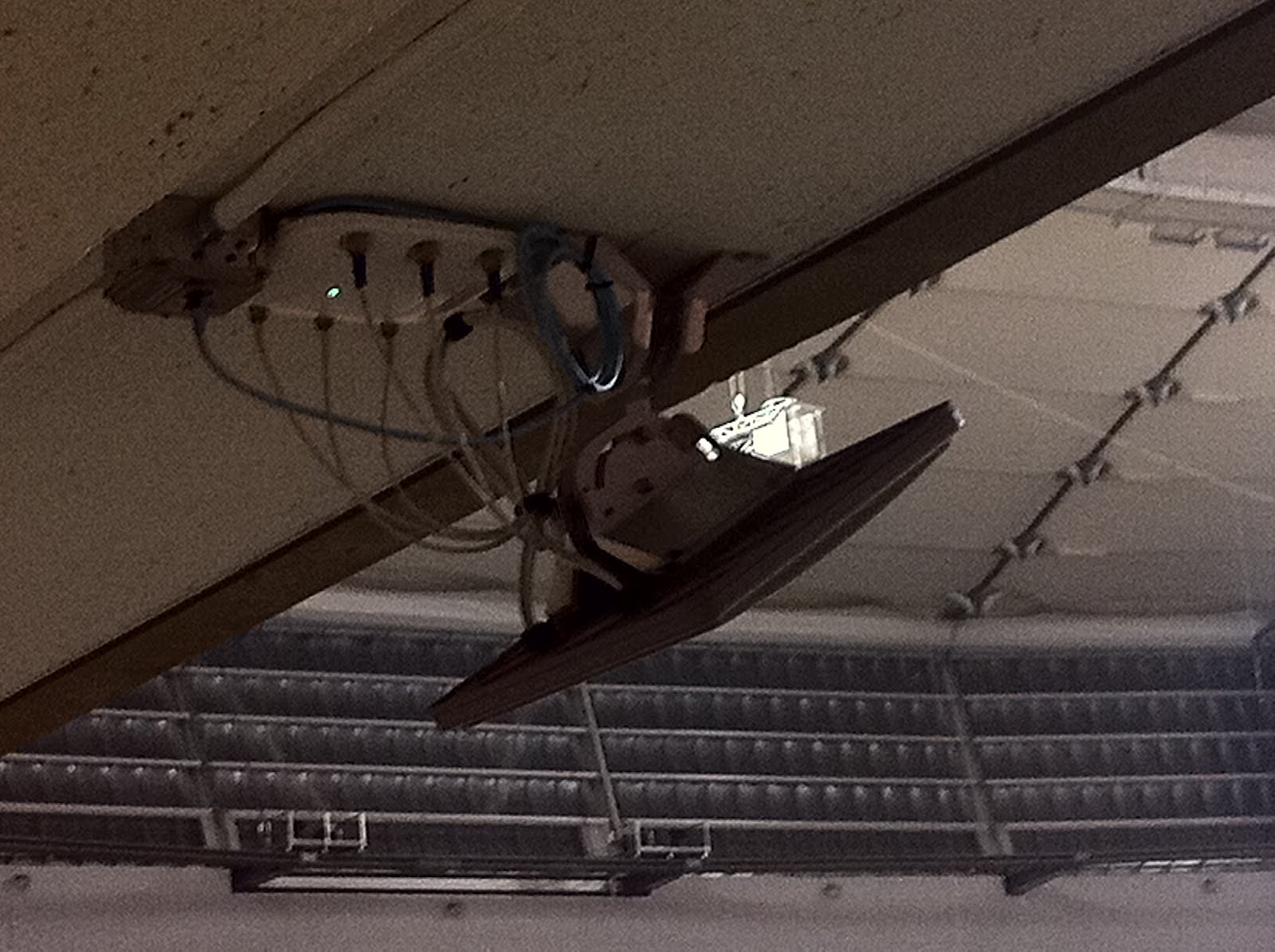
Telus crews, under the guise of the top secret "Project Frog," were in and out of the construction site throughout the summer to install the wi-fi and mobile phone antennas and video screens, but often had to hurry up and wait. B.C. Pavilion Corporation and PCL Constructors Westcoast had other priorities. The application of the fabric roof was way behind schedule, delayed from February to July because the Quebec steel contractor Canam and French cable installer Freyssinet couldn't get along and cables and machines were failing or breaking.


The reopening came and went. So did the marquee event, the 99th Grey Cup. The name remained B.C. Place Stadium. Telus had incurred extra costs and the value of the naming rights had diminished. It reasonably wanted a better deal than the one originally agreed.

Meanwhile, the B.C. Liberal Party ended 2011 with its "Risky Dix" attack ad campaign and began 2012 by soliciting various frequent donors to build a war chest for the Port Moody and Chilliwack by-elections. Telus, which gave $352,407.35 since 2005, declined.

The Liberals were miffed after awarding Telus the $1 billion, 10-year omnibus telecommunications contract in summer 2011 in controversial fashion.

The Liberals were hammered by Telus competitors, chiefly Bell, Rogers and Shaw, who accused the government of violating trade agreements and government procurement rules. The tendering process for nine different contracts lasted more than two years before the government's sudden, surprise bundling of the entire business into one deal, for one company.

Despite the party's ties to Telus, Premier Christy Clark has telecommunications connections of her own.

Not only is Clark a good friend of Bell-sponsored, Vancouver Whitecaps' owner Greg Kerfoot, but she was formerly employed as a CKNW radio talkshow host by Corus Entertainment, a company controlled by Shaw Communications.

In fact, Clark met on Jan. 30 in the Premier's Vancouver Office at the World Trade Centre in Canada Place with Shaw CEO Brad Shaw.

Shaw Communications is contesting Telus’s application to trademark Optik TV. Shaw also owns Global TV, which boasts the best-rated local TV newscast in Canada on Global BC.

As if to make matters worse, Telus is suing the B.C. government. Deputy Minister of Finance Peter Milburn denied Telus's appeal for a Social Service Tax refund on Feb. 7, according to the March 9-filed B.C. Supreme Court documents below. Telus claimed it errantly paid or self-assessed $306,311.61 in taxes after the 2004 purchase of servers, operating software and maintenance from IBM, Lucent and Sun Microsystems. At least $96,580.40 was not refunded and remains in dispute.

Telus sues B.C. government for a tax refund

While Clark has been noticeably quiet during a week-long break from the Legislature (after mis-handling the mess and message the previous week), some Liberal MLAs have used their time off to arrange photo opportunities with community newspapers to dole funds from a $30 million pot Clark announced at the Union of B.C. Municipalities convention on Sept. 30, 2011 in Vancouver.

MLAs Randy Hawes and Marc Dalton went to Mission to announce $185,000 for dehumidifiers at the Mission Leisure Centre’s three rinks. Hawes and Dalton told Abbotsford Times reporter Christina Toth that the money was left over from the stadium’s renovation!

MLAs Randy Hawes (Abbotsford Mission) and Marc Dalton (Maple Ridge Mission) met with the district's mayor Ted Adlem and Coun. Nelson Tilbury at the leisure centre to hand over the cheque.

The largesse comes from monies left over from the $563-million renovation of the B.C. Place roof. When the project came in $30 million below the last estimated cost, Victoria decided to disperse those dollars to recreation projects around B.C., explained Hawes.

"We just got the information on the weekend," he said.


Preposterous! Minister responsible for B.C. Place Pat Bell told me in a Jan. 30 interview: “We’re probably three or four months away from being able to roll out the final numbers.”

"For them to claim this is surplus money from a project millions of dollars over budget is a real stretch," NDP critic Spencer Chandra Herbert told me. "There is no surplus because they have no financing plan to pay for the project."

UPDATE, 5 p.m., March 22: Hawes claims "we are under the final budget for the stadium refit" (though he didn't mention any numbers). But he goes on to say:

"I either misspoke or was misunderstood. The recreation funding of $30 million for more rural communities is not from the under budget amount from BC Place. That was capital funding and from an accounting perspective, this funding must be from operating funds. I have looked at this funding as a way to allow some communities that might not benefit from the stadium remake to feel they have some benefit. I do feel a bit foolish having tied the funding directly to the under budget amount on the stadium. Incidentally, while the total recreation grant funding is $30 million, that does not mean the stadium savings was $30 million. Mea culpa."


UPDATE, 7 p.m., March 22: I asked Hawes for proof that the B.C. Place project was under budget. Not surprisingly, he has none.

"I don't know what the numbers are but Pat Bell has said numerous times that we are under budget. I believe the final numbers are still to come in."


Work continues at the stadium. A new fence is being erected outside the west side service entrance. The level 1 media entry is under renovation (and wasn’t complete for the Whitecaps’ home opener).

This is the same stadium that is now faced with a $35 million to $40 million shortfall because of the nixed Telus naming rights deal. The same stadium where an operating deficit of $49 million has been forecast for 2012-13 to 2014-15, according to the latest Service Plan.

The same stadium where grease leaks from the support cables have damaged the roof and could cost $10 million to repair.

The same stadium that will be the subject of an 85-day B.C. Supreme Court trial expected to begin in October 2013 between Canam and Freyssinet. Canam is suing for $26.15 million, Freyssinet wants $6.5 million. B.C. Pavilion Corporation is a defendant in the Freyssinet lawsuit.

Here's my modest proposal: move the B.C. Liberal caucus and its staff under the expensive big top at B.C. Place. They are clowns, who are running this province like it’s a circus.

Cue the circus music.

Tuesday, March 20, 2012

PlayNow to be "Paddy-powered"

It's not every day that I receive 950 pages of documents via Freedom of Information.

It's doubly special when it arrives before St. Patrick's Day and concerns one of Ireland's biggest companies which is cheeky enough to show nudity in its corporate reports. I'm referring to Paddy Power, the Dublin-based retail and online gambling giant that is now a key partner with the British Columbia Lottery Corporation.

Read my story here about this timely relationship and the next step in B.C. gambling expansion in the Vancouver Courier.

Paddy Power wants to grow and enter the North American market. BCLC plans to re-launch its PlayNow legal online gambling website this summer (when the 2012 Olympics will occur) with a heavy emphasis on sports and event betting. Just in time for the federal government to relax Canadian gambling laws because of an NDP Member of Parliament's private member's bill.

By summer, it should be legal to bet on a single sporting event in Canada through legal channels, such as BCLC and the other provincial government monopolies. With this comes the legitimate concerns that more teenage boys will find a way to gamble and eventually become addicts. Read about the science here and watch the Gambling Boys documentary here. In addition to health, there are other worries about the proliferation of gambling and the risks of match-fixing, as chronicled by author Declan Hill.

Sports fans in Canada (particularly British Columbia) will be happy. But deficit-plagued governments across North America are revenue-hungry and, when it comes to gambling, tend only to see the benefits side of the ledger, not the costs.

All 950 pages are posted below. The file is so long, that I have included this list of highlights for your ease of browsing (with page numbers according to the Scribd.com tabulation).

Pages 2-3: The B.C. Gaming Policy and Enforcement Branch registration approval for Paddy Power.
Pages 4-5: GPEB regulations (note how sections b, h, j, m, n and p do not apply to Paddy Power).
Page 6: Paddy Power's B.C. registration certificate.
The next 70 pages deal with Paddy Power's software provider, Playtech.
Page 76: 2010 Paddy Power annual report. (Note the iPad motif, a nod to mobile gambling on tablets).
Page 242: 2009 Paddy Power annual report.
Page 378: 2008 Paddy Power annual report.
Page 482: 2007 Paddy Power annual report (inspired by the hilarious Father Ted Channel 4 sit-com. The report contains a well-endowed woman in a wet T-shirt on page 491 and an Elvis impersonator in front of Buckingham Palace on page 493).
Page 586: 2006 Paddy Power annual report. (The company marked its 18th year with a Poker magazine cover marking a Paddy Power-sponsored world record strip poker tournament on page 588, rugby player Donnacha O'Callaghan losing his shorts and a streaker losing more on page 589).
Page 688: 2005 Paddy Power annual report.
Page 774: Playtech news releases.
Page 776: Malta Lotteries and Gaming Authority corporate structure.
Page 777: Paddy Power news release on entering the French market.
Page 781: Article about Online Gaming in Kahnawake from the Nov. 6, 2011 Gaming Law Review and Economics by Kahnawake Gaming Commission lawyer Murray Marshall.
Page 791: internal GPEB email and records about the investigators' trip, travel arrangements and expenses to Dublin to inspect Paddy Power's operations.
Page 810: U.K. Gambling Commission: Licensing, compliance and enforcement policy statement.
Page 834: U.K. Gambling Commission: The Gambling Commission's betting integrity decision making framework.
Page 851: Isle of Man Gambling Supervision Commission: Online Gambling Guidance Notes for the Prevention of Money Laundering and Countering of Terrorist Financing.
Page 943: Credit Suisse Private Banking Security Agreement.


Paddy Power to re-power B.C. Lottery Corporation online gambling

Tuesday, March 13, 2012

Another billion-dollar B.C. dilemma

Did the British Columbia government botch another billion-dollar deal?

Some of the biggest companies in Canada think so. Could this ultimately be at the root of the cancellation of the Telus naming rights deal for B.C. Place Stadium?

Bell, Rogers and Shaw have accused the B.C. government of unfair tendering practices. They allege that the direct award of the government's $1 billion, 10-year long distance, voice, data and mobile phone service contract to Telus violates national and international free trade agreements and even the government's own regulations!

Taxpayers, they say, got the shaft.

While Telus is the biggest private sector employer in B.C., it just so happens to be one of the biggest corporate donors to the B.C. Liberals. Elections B.C. shows Telus gave $352,407.35 since 2005. Premier Christy Clark supporter Stockwell Day, the former senior federal Conservative cabinet minister, is on the Telus board of directors. Clark appointed Day (photographed below) to the B.C. jobs and investment board and immigration task force.


This is what happened. The government issued a Negotiated Request for Proposal for its Strategic Telecommunications Services Procurement Project on Dec. 22, 2008. Just over two-and-a-half years later, the government suddenly halted the process of tendering nine "bundles" of work, took a 180-degree turn and gave Telus the whole enchilada, as they say, on June 29, 2011. The government and Telus have spun this as an economic generator that will improve mobile phone service and Internet access in rural B.C.

"When Telus was the successful bidder on all nine individual bundles of services in the NRFP as well as on the total package of combined services, it became clear to government that, instead of awarding the bundles separately, a stronger partnership with Telus could realize a greater overall benefit to families and businesses in B.C." says the news release.


The deal includes a two-year renewal option, so Telus could make $1.2 billion by the end of the term. Unsuccessful bidders had until July 13, 2011 to file complaints and, boy, did they ever!

A political party, whose name was not disclosed, obtained the vendor complaints after filing a Freedom of Information request to the Ministry of Labour, Citizens Services and Open Government. The 189 pages of information were posted online March 9, 2012. Download them all here.

It is easy to dismiss this as sour grapes by sore losers. But it is not so simple. Read the whole file and you will quickly notice a pattern. Companies, big and small, feel they were treated unfairly by the B.C. Liberal government. Yes, that's the same party that controversially sold B.C. Rail to CN Rail and part of B.C. Hydro to Accenture. The former deal was the subject of a massive government corruption scandal that dominated the news for the better part of a decade. Clark was deputy premier at the time and has steadfastly refused to order a public inquiry.

Her leadership campaign mastermind Patrick Kinsella was involved in the B.C. Rail and B.C. Hydro deals. There is no evidence that he had a hand in the Telus matter. Yet.

So, put aside the matter of the allegedly oversized sign, the laughably "iconic" B.C. Place name or the "not the best deal for taxpayers." Those were lines peddled by the deer-in-the-headlights Premier, her Finance Minister Kevin Falcon and Jobs, Tourism and Investment Minister Pat Bell as they tried to explain away kiboshing a $40 million contract and breaking a promise to taxpayers.

Did the B.C. government cancel the Telus naming rights for B.C. Place (directly or indirectly) to distance itself from Telus, for fear of its competitors filing lawsuits and complaining to international trade tribunals?

Consider the following excerpts of complaints to government:

Mario Belanger, senior vice-president of sales, Bell Canada:

"Bell believes the implications of this decision reach well beyond the Ministry in charge of the NRFP. The decision has serious implications with respect to provincial, inter-provincial, national and international trade policy and existing and future trade agreements. The decision runs contrary to the Province's Agreement on Internal Trade (AIT) and Trade, Investment and Labour Mobility Agreement (TILMA) commitments. The decision is based in part on an assessment of Telus's capabilities as the only provider who could ofter the services.

"This assessment is not consistent with the regulatory framework for telecommunications in Canada, and has not been tested by a competitive bidding process. The decision runs contrary to the duty of fairness owed to all bidders participating in a competitive procurement process.

"The decision will have a material adverse effect on the availability of competitive communications services in the Province for consumers, small businesses, governments and enterprises.

"In addition to contravening international and national agreements, the Province has also breached its own Core Policy and Procedures Manual.


Jean Brazeau, senior vice-president of regulatory affairs, Shaw:

"Once the B.C. Government determined its own procurement process was not going to prove satisfactory, the entire procurement process should have been cancelled. Then the B.C. Government would have been free to retender for services under a new procurement process that allowed for companies to explore various options such as forming consortiums.

"The lack of an open and transparent procurement process reduces the B.C. Government's ability to ensure the best value for taxpayers. In addition, extending the scope without prior notice eliminates the opportunity of the B.C. Government to evaluate the benefits of future technological innovation, lower costs, or investment that could be provided by Shaw, or a consortium of industry bidders. This limits the B.C. Government to only the services and hardware of one vendor.

"Shaw objects to the fact that it took a two-year procurement process to arrive at NOI #4015, and then only two weeks were allowed for filing objections to this process."


Gordon LaFortune, Gottlieb and Associaties, lawyer for Rogers:

"The size and scope of the contract awarded to Telus is extraordinary. As a result of this award, Telus would be the sole provider of telecommunications services to the Province of British Columbia for 10 years. The range of services and covered government entities is so broad that no other supplier, including Rogers, would be permitted to provide telecommunications services during the currency of this contract.

"At the end of this period, Telus would have such an overwhelming advantage as the incumbent supplier that it is unlikely that it could be displaced even if the province put the telecommunication requirement out to tender. Therefore, by awarding such an extensive contract to Telus, the Province effectively grants Telus the contract in perpetuity."

Monday, March 12, 2012

Professor proffers Olympic predictions

Any Canadians expecting the gold medal dominance of their Vancouver 2010 Winter Olympics team to translate into improvement for the London 2012 Summer Olympics team will be disappointed if predictions released March 12 come true.

Moose Jaw, Saskatchewan-native Daniel Johnson, an economics professor at Colorado College in Colorado Springs, Colo., predicts Canada will win 17 medals, including four gold, in London. That was also his prediction for Beijing 2008. The actual tally four year ago was 18 medals and three gold. Not too shabby, eh?

Well, maybe if you're the Canadian Olympic team. That would put Canada in 15th on the gold medal scale and 12th overall. On overall medals, Johnson predicts Canada will be surpassed by Netherlands and Hungary (19), Italy and Japan (31), Australia (38). On the gold medal scale, he believes India, Poland and Netherlands will win 5. Romania (6), Hungary (7) and Australia (8), he predicts, will also beat Canada.

Johnson boasts a remarkable 93 percent success rate in his Olympic predictions over six consecutive Games, and his model does not include athletics. He instead relies on a nation's per capita income, population and its proximity to the host city.

Johnson predicts the U.S. will win the most overall (99) and most gold (34). China (67 including 33 gold), Russia (82 including 25 gold), and host Great Britain (45 including 20 gold) are the top four. According to Johnson's March 12-issued news release:

"During the last Summer Games, in Beijing in 2008, Johnson’s model forecast that the U.S. would top the medal count, and it did, winning 110 medals (seven more than predicted). He also correctly predicted that China would top the gold medal count, and it did, winning 51 gold medals (seven more than predicted). During the last Winter Games, in Vancouver in 2010, the model predicted 27 medals for Canada (they won 26 instead), but the American and German teams both vastly outperformed expectations and topped the podium more often."


What Johnson doesn't mention is that his prediction for Canada's gold medals in Vancouver 2010 was a paltry 5. Canada won a record 14.

Read more here and see the ranked prediction table below.

2012 Olympic medal predictions by Dan Johnson

Saturday, March 10, 2012

It should have been Bob Ackles Field

If B.C. Pavilion Corporation and the B.C. government took my free advice, they could have saved a $40 million deal and prevented themselves a ton of embarrassment.

How, you say?

Back in 2008, just days after B.C. Lions' president Bob Ackles died, I proposed that the field at B.C. Place Stadium be renamed in his honour. See my column from the Vancouver Courier below.

Had my advice been heeded, there would never have been a Bell Pitch. The Vancouver Whitecaps and B.C. Lions would both be playing on a field named for one of the most important people in B.C. sport history. Telus could very well have its name on B.C. Place by now and one of the promises to taxpayers (revenue from the sale of naming rights) would have been fulfilled.

As it stands, Telus has its hand out to government, expecting to be paid for services rendered and equipment installed. The only way to soften the blow would be for PavCo to complete the exclusive supplier contract that is being negotiated.

The taxpayers wait to learn the final cost of the budgeted $563 million renovation and they also wonder whether the business-friendly B.C. Liberal Party is able to govern anymore.


Remembering Bob Ackles

BY Bob Mackin, July 11, 2008

Bob Ackles is gone. Why is he missed so much? He represented the everyman. He demonstrated that you can start at the bottom and make it to the top through honest, hard work. He wasn't a scholar and he wasn't the scion of a tycoon. Ackles was a six-decade-long, rags-to-riches story that began in 1953 when he approached B.C. Lions' original head coach Annis Stukus on the West Side's Heather Park field. He got hired on the spot as the team's first waterboy.

Ackles' vocation was Canadian football, a sport that unites big cities and small towns, anglophones, francophones and immigrants. His job wasn't just helping put the best players in orange jerseys or putting bums in seats at B.C. Place Stadium. It was to foster the sport of Canadian football for all ages and abilities in B.C., and to ensure the Canadian Football League remained affordable family entertainment in a city hell-bent on world class status.

After 32 years with the Lions, Ackles stepped away in 1986 at the team's peak to find new career challenges in the National Football League. The ship was sailing just fine, thank-you, three years after opening B.C. Place, a year after winning a second Grey Cup. While he was gone, two of the team's owners nearly sunk the franchise. Hamilton auto parts magnate David Braley finally came along in 1997 and brought Ackles home in 2002 to save the team. That he did. The Lions are a proud symbol of B.C. again. Just look at how many people wear orange at home games. Not long ago, blue--the colour of empty B.C. Place seats--was the dominant colour under the dome.

Some have suggested that B.C. Place Stadium be renamed for Ackles. That's not going to happen. Ackles was a humble fella and wouldn't have wanted his name on the marquee. What's more, it should have been called Terry Fox Stadium from day one. B.C. Pavilion Corporation announced in February that the stadium's name would be sold to a corporate sponsor.

PavCo, a provincial Crown corporation, should look south to the example set in San Francisco. When Bill Walsh died last summer, the architect of the San Francisco 49ers' Super Bowl dynasty was commemorated with Bill Walsh Field at Monster Park, which has since reverted to the original Candlestick Park monicker.

The same gesture should happen here. I urge Premier Gordon Campbell and PavCo chairman David Podmore to dedicate the playing surface at B.C. Place to Ackles. Whenever someone steps onto the FieldTurf for any sport, they should be on Bob Ackles Field at B.C. Place Stadium.

Ackles never played a down for the Lions, but he was as important to the game as all the players who did. There are sometimes hundreds of little people behind the scenes at sporting events who get little recognition. Some are volunteers, who gain nothing but the sense of satisfaction.

Let's hear it for the waterboys--and the watergirls. Let's have Bob Ackles Field at B.C. Place Stadium.

Exclusive: inside the B.C. government name game

Some observers of the government's snub of Telus over the B.C. Place Stadium naming sponsorship wonder why the government didn't just let Budweiser buy the name and be done with it.

Telus installed $10 million to $15 million worth of wi-fi and mobile phone systems and video screens as part of the deal it reached with B.C. Pavilion Corporation in March 2011. That $35 million to $40 million you've heard about is not all cash on the table. It relied heavily on the provision of goods and services. Now PavCo has to buy its way out with your money and mine. The only way it can soften the blow now is to designate Telus as an exclusive or official supplier.

But the bigger reason is that no provincial government building in B.C. can be named after Budweiser. Or Molson Canadian. Or Guinness. Or even the Sorrento, B.C.-made Crannog Back Hand of God Stout or Gael's Blood Potato Ale.

The province's Naming Rights Policy says government will not approve an opportunity for naming recognition:

"that involves an individual, business or organization whose main business is derived from the sale of alcohol, other than a provincial or national industry association that focuses on harm reduction regarding the responsible use of alcohol."


Yes, the province has a naming rights policy and applications are overseen by a little-known committee of bureaucrats (chaired by Executive Lead of Strategic Vendor Management Richard Poutney) under the Intellectual Property Program within the Ministry of Labour, Citizens’ Services and Open Government. You can read it here. However, the policy contains a loophole that opens the decision to political interference.

Section 4.5 of the policy says cabinet will decide on naming opportunities if:

(a) the size or visibility of the asset is of particular significance;
(b) the value of the contribution is greater than five million dollars;
(c) the asset is or will likely be the object of media attention, or is otherwise in the public eye;


All three apply in the context of the B.C. Place naming rights opportunity. The minutes for the committee's only meeting in 2011 (below) show that the Telus proposal to rename B.C. Place Stadium as "Telus Park" was not submitted to the committee. This was handled (or, perhaps, mishandled) solely by cabinet and, therefore, we may not know the details until 2026 or 2027 when the particular cabinet documents would become public.

What do you think? Should the naming of any and all provincial buildings in B.C. be vetted first by a committee that reports publicly (and doesn't wait for reporters to file a Freedom of Information request)? Should cabinet have a role, particularly when the bidder is a major donor to the ruling party or a major government contractor? (Telus donated more than $350,000 since 2005 to the B.C. Liberals and was given a $1 billion, 10-year government service contract in 2011.) And what happens if the chairman of the public body with the name up for sale has close ties with the corporation that wants to buy the name of the public building? (David Podmore's Concert Properties board includes two senior Telus executives and two senior officials from the Telecommunications Workers Union.)

It is, after all, taxpayers' money and taxpayers' own the buildings...

Province of British Columbia Naming Committee

Does Brown-out signal lights out for Premier Photo Op?

The shocking resignation of Peter Brown from the board of the B.C. Pavilion Corporation could be the beginning of the end for Premier Christy Clark's nearly year-old reign as Premier of British Columbia.

Brown was in New York March 9, while Clark was in Ottawa. Brown's name and profile disappeared from the B.C. Pavilion Corporation website at the end of the same week when Clark and Minister responsible Pat Bell publicly confirmed that the B.C. Place Stadium naming rights deal with Telus was cancelled. Telus had installed $10 million to $15 million of wi-fi stations, mobile phone antennas and video screens in the stadium as part of the deal that PavCo recommended to cabinet.

Through his Vancouver investment house, Canaccord, Brown has donated $312,230 to the B.C. Liberals since 2005 and backed George Abbott for the leadership of the party in the 2011 race. Brown was one of the biggest boosters of Gordon Campbell, who left the premiership after almost a decade and is now Canada's High Commissioner to the United Kingdom and Northern Ireland. Clark was sworn-in on March 14, 2011.

Brown has resigned before from a similar organization because of political interference.

Brown was vice-chairman of the Expo 86 Corporation and chairman of the B.C. Place Corporation, a PavCo predecessor which merged with the B.C. Development Corporation to form the B.C. Enterprise Corporation.

Brown resigned in April 1988 after he was accused by Premier Bill Vander Zalm's secretary David Poole of wining and dining Li Ka-Shing, the eventual winning bidder for the Expo lands. Brown admitted hosting Li's son Victor for dinner at his Point Grey home, but denied any wrongdoing. He offered a stinging rebuke of Poole, the most powerful unelected official in the Vander Zalm government.

"The dinner in my house was part of a purely proper program to encourage any bidder that we could to participate in the B.C. Enterprise bid process," Brown was quoted in the Vancouver Sun. "Any attempt to cast aspersions on that function by anyone is a bitter and petty act by someone who's proved before he's not sure what the rules are."


Brown was on the board of directors for the original North American Soccer League Vancouver Whitecaps. He is also a collector of Group of Seven masterpieces.

It could be theorized that Brown's resignation in 1988 was part of the slow process that led to the eventual fall of Vander Zalm, who was finally forced out in 1991 by the Fantasy Gardens conflict of interest scandal.

Could the fumbling of the renaming of B.C. Place be the undoing for Clark?

UPDATE: On March 12, I received the following email from Peter Brown, who declined my March 10 request for an interview ("At 70 years of age I am trying to get my privacy back which is more difficult than it should be," Brown wrote, via his iPad.)

"It would be nice to be in a profession like yours where rampant poetic license was practiced. Here are some facts that you neglected in your blog:

"I did not back George Abbott for leadership of the Liberal Party as I believed he never had a chance.

"I entertained every bidder for BC Enterprise in my home and Grace McCarthy, the Minister responsible, was always present.

"That newspaper reference was caused by David Poole's attempt to improperly influence the privatization of the assets of BC Enterprise. This was a failed attempt by him. I had always agreed to serve as Chairman of BC Enterprise until the principle assets were privatized which was concluded with the sale of the Expo Lands. The government of the day had nothing to do with my decision.

"My current resignation is as I publicly stated. I agreed to go on the board of PAVCO to oversee the complex construction of two major Vancouver icons. That job is complete and I believe that board representation should now come from people in Tourism and Marketing - neither of which are my expertise. The decision was compounded by the fact that I have taken on too many boards and committees and need to cut back on boards like this where my contribution going forward is less relevant.

"As to my politics, I think it should be obvious to everyone that I am a supporter of governments who believe in free trade and free markets and believe the best results for all citizens will be generated by free enterprise alternatives. In this case, even you should be able to ascertain my political choice as the only one possible which makes the inferences in your article ridiculous. All the more so when one considers choices in the upcoming election and the critical impact the wrong decision could have on our economic well being."

Peter Brown


I followed up and asked Brown about how Canaccord Capital donated $11,500 to Abbott's campaign on March 28, 2011. No donations to any other contestant are listed on the Elections B.C. database. Canaccord donated $25,000 to Vision Vancouver in 2009. The Non-Partisan Association is the civic free enterprise party in Vancouver. I asked for, and Brown declined to supply me, the date on which he tendered his PavCo resignation and the contents of the resignation letter. This is how he responded:

"Abbott's donation was nothing to do with me. I was quite active with another candidate. Canaccord and my personal donations are very separate as I stepped down as CEO five years ago. I am only responsible for donations in my name and the name of the Peter and Joanne Brown Foundation.

"If I had known the renewal for Directors was May 27, I probably would have waited until then as there was no sense of urgency. I had already said publicly that I am on too many Boards and had just agreed to Chair another so I was looking to cut back. As to sharing my letter of resignation with a reporter that I don't know -- I am sure even you know that would be extremely inappropriate. The letter was addressed to PAVCO and it is there prerogative to release it of not

"It was always the government's prerogative to approve or disprove the TELUS contract that was being negotiated under the Letter of Intent so, once again you are on the wrong wicket

"I hope this ends your unwanted entry into my personal affairs."


My questions pertained only to Brown's activities as a director of taxpayer-owned bodies and his publicly disclosed donations to political parties. As I reporter, it is vital that I ask such questions of someone who is appointed to be part of a group managing public assets and funds.

UPDATE: March 14.

PavCo spokesman Duncan Blomfield confirmed that Peter Brown's resignation letter was dated Feb. 13, but he declined to discuss the contents.

Vaughn Palmer, the dean of political reporters in B.C., has confirmed that Peter Brown resigned from the PavCo board, "in protest" over the cancelled Telus naming rights deal. Read his column here.

Funny how Brown's story changes, depending on the media outlet he's in contact with. Readers are smarter than he thinks.

Friday, March 9, 2012

Exclusive: RF Place Stadium


During the first full week of March 2012, we finally learned that B.C. Place Stadium's $40 million Telus naming rights deal was bungled and that grease is leaking from cables onto the roof, causing as much as $10 million of damage.

Both stories offer further proof that the government should get out of the stadium business and focus on what it should be doing: education, healthcare, law and order.

What is harder to prove is that the 800 wi-fi and 100 mobile phone transmitters installed in B.C. Place by Telus and Cisco are hazardous to public health.


The safety of wi-fi networks has been questioned by groups like the Safe School Committee, which opposes wireless Internet in schools and claims it its harmful to children's health. The moms and dads may have a point.

In a monumental move, the World Health Organization's International Agency for Research on Cancer issued this news release on May 31, 2011 calling radiofrequency (RF) electromagnetic fields (EMF) "possibly carcinogenic to humans." Click here to listen to the news conference from that day. The key, universal theme is that more research is needed.

Five months after the stadium reopened from the budgeted $563 million renovation, WorkSafeBC finally took notice. It issued the inspection report below in reaction to concerns expressed by the stadium's Joint Occupational Health and Safety Committee.

In a nutshell, B.C. Place equipment must be "installed, operated and maintained” within Safety Code 6, the Health Canada regulation of human exposure to RF EMF fields from 3 kHz to 300 GHz. That includes radiation notice or warning signs, depending on the intensity of the signal emitted.

Telus spokesman Shawn Hall said the signal strength in B.C. Place is similar to a home wi-fi system or AM/FM radio signals in the airwaves.

“When the committee asked us the question we re-verified our wi-fi and cellular signals in B.C. Place fall within the levels set out by Canada's Safety Code 6, so they are safe,” Hall said. “We are now preparing a detailed response with more detail.”

What does Health Canada say in general about the safety of wi-fi and mobile phone signals?

"Based on scientific evidence, Health Canada has determined that low-level exposure to radiofrequency (RF) energy from Wi-Fi equipment is not dangerous to the public. This conclusion is consistent with the findings of other international bodies and regulators."

"At present, the evidence of a possible link between RF energy exposure and cancer risk is far from conclusive and more research is needed to clarify this "possible" link. Health Canada is in agreement with both the World Health Organization and IARC that additional research in this area is warranted."


For more from Health Canada, click the link here. Or download the PDF here. Industry Canada also has published guidelines for the protection of the general public in this PDF.

I will keep an eye on the minutes of B.C. Place's monthly health and safety committee meetings. If there are any proven cases of radiation-related illness, you'll read about it here.

For now, strained eyes and sprained thumbs from Tweeting on a smart phone at a Whitecaps or Lions game are the most-certain risks from the free Telus wi-fi in B.C. Place.

B.C. Place communications radiation situation

Wednesday, March 7, 2012

Grease is the word at B.C. Place Stadium

Yet more troubles with the new roof at B.C. Place Stadium, where taxpayers are on the hook for the renovation budgeted at $563 million.

You probably know that the naming rights deal with Telus, worth $40 million in goods, services and cash, was cancelled. The announcement came March 7, but it actually got kiboshed last month. B.C. Place workers were finally issued uniforms with the B.C. Place logo after being given generic shirts and jackets before the Sept. 30, 2011 reopening.

The Telus installation of video screens, wifi and mobile phone antennas, and its Optik TV was supposed to be free and counted toward the $40 million total. Telus is negotiating an official supplier agreement, but you can bet the company is asking for the government to buck up for the $10 million to $15 million of goods and services provided. Telus was snubbed. Taxpayers lose.

What you may not know is the story that the B.C. government and B.C. Pavilion Corporation don't want you to know. The elephant in the room, so to speak. There are more troubles with the roof.

Grease has leaked from the roof support cables and damaged the fabric roof. The cost to fix it could be up to $10 million, a B.C. Supreme Court judge heard on March 6. I broke the story March 6 in Business in Vancouver. Read it here.

The problem was identified before the roof fabric was installed. The documents below are proof. Will it be covered under warranty? If roof panels need to be replaced this summer (the driest part of the year, how will that affect the Vancouver Whitecaps and B.C. Lions?

Neither PavCo chairman David Podmore nor CEO Warren Buckley made themselves available for an interview. Buckley, I am told, was traveling. My request to inspect the damage was not fulfilled.

PavCo's Duncan Blomfield downplayed the problem. PavCo has consistently downplayed problems with the stadium since it called the snow-caused roof rip and collapse of Jan. 5, 2007 a "controlled deflation."That incident was the catalyst for the most-expensive, non-essential public building renovation in the province's history that was never debated or put to a vote in the Legislature.

Blomfield claimed damage is covered by the contractor's warranty, will cost less than $1 million to repair and won't compromise events. I'm not sold on that. If there are not direct costs, there will be indirect costs. What happens if roof fabric has to be replaced this summer or next, during the busy sports events season?

We may have to wait for the court case in October 2013 between steel contractor Canam and cable installer Freyssinet to find out the truth. (Read all about the multimillion-dollar legal battle, in which PavCo is listed as a defendant, here.) Unless Auditor General John Doyle wants to probe the expensive project first.

The stadium has three types of roof material: Tenara is the retractable portion in the centre; Sheerfill and Fabrasorb are the fixed portions that comprise the majority of the surface. They are also the most susceptible to grease damage, according to the revealing report below. PCL Constructors Westcoast, the general contractor, knew about the leaks in November 2010, many months before the fabric was finally applied. Shade Worldwide, the supplier of Sheerfill and Fabrasorb, warned that grease would permanently stain the roof.

Click here to watch the March 7 Global TV News story by Marisa Thomas and read the documents below. B.C. Place has a bigger problem far bigger than the lack of a corporate name on its shingle.


FOI 200 Shade World - REDACTED-Mackin

Tuesday, March 6, 2012

Revealed: why B.C. booze cops got body armour

An odd request for proposals was published in late 2011 by the British Columbia Liquor Control and Licensing Branch. The government agency sought 40 sets of concealable soft body armour for its inspectors. The reason why was not disclosed. Until now.

I broke the story on March 2 for Business in Vancouver. In a nutshell, the boss of B.C. booze enforcement, Karen Ayers, and three of her staff members were given a rude welcome at a Richmond establishment in June 2006. Two of them were roughed up. Their injuries were censored. Ayers responded swiftly by ordering a review of safety and security. Body armour, to protect against slashing and stabbing, was ordered.

Unfortunately, Ayers either did not want to do an interview or was gagged by someone in government. I figured it would have added to the story to have her voice. Maybe the outcome would have been greater public respect and support for liquor inspectors.

The source documents are below.

Why B.C. booze inspectors got body armour

Blog Archive