What's really behind the City of Vancouver’s rush to disband Occupy Vancouver’s camp from the bark mulch and concrete of the Vancouver Art Gallery’s north plaza?
Grey Cup Festival organizers fear protesters could disrupt the Nov. 26 Grey Cup parade and embarrass a major sponsor. The B.C. Supreme Court granted an injunction that allows police to evict protesters if they don't remove tents and structures from the Vancouver Art Gallery's north plaza by 2 p.m. Nov. 21.
No Grey Cup events were planned for the VAG plaza, where the protest began Oct. 15, and the Saturday morning parade route uses Burrard Street. There is no intelligence that such a protest would happen and Occupy Vancouver has not made a public statement against the Grey Cup festival or its sponsors. But a source involved with the 99th Grey Cup game organization indicated that nobody wants to risk embarrassing Scotiabank.
The Occupy movement’s protest targets have included banks. In Vancouver, locations of TD Canada Trust and RBC have been protest sites. Occupy protesters have also picketed against Enbridge, the company that wants to build a pipeline between the Alberta tarsands and coastal British Columbia to carry oil for export to Asia. Aboriginals opposed to the proposed pipeline attended the Scotiabank annual general meeting in Halifax last April. A Yinka Dene Alliance news release claimed Scotiabank raised $10 billion for Enbridge.
The newly re-elected Vision Vancouver-dominated city council enacted restrictive measures before the 2010 Winter Olympics to protect VANOC sponsors. No similar bylaws are in place for the Grey Cup. Mayor Gregor Robertson and his opponent Coun. Suzanne Anton are among the Grey Cup Committee members.
Planning for the Grey Cup Festival has been complicated by the ugly legacy of the June 15, 2011 Stanley Cup riot. The 1966 Grey Cup parade was a night-time affair and revelers rioted with Vancouver Police and RCMP outside the Hotel Georgia and courthouse (now the art gallery).
Freedom of Information requests for agendas and minutes of the large events oversight committee, central management team and Grey Cup committee have been denied in-full by the City of Vancouver.
Showing posts with label Occupy Vancouver. Show all posts
Showing posts with label Occupy Vancouver. Show all posts
Monday, November 21, 2011


Friday, November 18, 2011
Three more years?
Since 2008, it has been the best and cheapest place in Vancouver to witness tragedy and comedy. The seats are new and comfy and there is even “free” wifi.
I’m talking about Vancouver city hall, at Cambie and 12th. Government is not supposed to be so entertaining. But that’s how it has been under Vision Vancouver's management.
In my 21-year career, no single government I have followed has dealt with so much upheaval in such a short amount of time. Governing an Olympic city before, during and after the Games has proven harder than Vision Vancouver ever imagined. On Nov. 19, it will be up to the voters to decide whether Mayor Gregor Robertson and his Vision Vancouver-dominated city council should be rewarded.
Robertson overcame an unpaid SkyTrain ticket and rode the Olympic Village financing scandal to victory in the 2008 election. His administration has been anything but the moderate, business-like one that was promised. At a time of global and local socio-economic upheaval demanding no-frills, cost-conscious government, Vision Vancouver has made bike lanes and chicken coops priorities. I haven’t seen any rogue roosters on the streets yet, but I found evidence that helmet and safety bylaws are not being properly enforced.
It all seemed to unwind for Vision Vancouver just before the Olympics, with the firing of chief electrician Ark Tsisserev for nothing more than cost-cutting. The original spin was that Tsisserev had retired or quit. Instead, his lawyer threatened a wrongful dismissal lawsuit and the city changed its tune. Ark floated away with a nice golden parachute.
Tsisserev had red-flagged concerns about safety at Olympic sites, including the Olympic Village. During the Games, a barrier collapsed at the City of Vancouver’s David Lam Park live site when the crowd surged. I found out later that city hall knew there were serious safety concerns because: A) none of the officials had not figured out the maximum capacity of the site and B) the emergency exits were locked and nobody knew where to find the key!
So 19 people were injured and nine hospitalized on Feb. 16, 2010 in the worst crowd control incident of the Olympics. There are at least two lawsuits against the city. One girl’s flesh was ripped from her leg in the melee.
After the Games, more chaos with city hall oversight and infrastructure.
It’s lucky nobody was killed in a demolition gone-wrong on Hornby Street or a hazardous materials incident on Nelson Street at the old B.C. Hydro building, now the Electra apartments and offices. Both incidents exposed city hall regulatory shortcomings. There were sinkholes in South Vancouver and downtown that affected major transportation routes and harmed businesses. There was a propane explosion at the Vancouver Christmas Market, on the day it was to open.
And then the ultimate tragedy -- the preventable deaths of three men before Christmas 2010 in an illegal rooming house on Pandora Street. Common sense says the city should have acted swiftly and decisively and condemned the building and found the men suitable accommodation elsewhere. But that did not happen. Inspector Carlene Robbins sued in the aftermath.
After the Games, Robertson went to New York City in spring 2010 to make him look like a statesman back home, but instead spent much of his time meeting with New York-based party supporters. Chief of staff Mike Magee held mysterious “hosting” functions at bars and restaurants in the Big Apple, but kept secret the identities of his guests.
Robertson was caught calling concerned citizens “fucking hacks” after a lengthy council meeting. Some of those “hacks” were members of his own party. Randy Helten got so angry at Vision Vancouver, he started his own party called Neighbourhoods for a Sustainable Vancouver.
The Mayor’s Office hired a spin doctor who in turn hired a blogger to attack other bloggers and the media. It was officially a contract for “conversation mining.”
Researcher Vivian Krause probed Vision Vancouver’s intricate web of campaign financing. Her fair questions about whether American interests are breaking Canadian laws and influencing Vancouver policy making have gone unanswered. Vision Vancouver bagman Joel Solomon lobbied deputy city manager Sadhu Johnston to find a spot for one of his coffee company investments.
Of course, that should have been the job for the Vancouver Economic Commission, but it was too busy trying to pad the results of its Olympic business promotion while hiding the real information from nosy journalists.
Journalists have been stymied, under Vision Vancouver, because of city manager Penny Ballem’s gag order for staff. Meanwhile, the city communications budget has skyrocketed and the Freedom of Information office gutted. The city has fought tooth and nail against those who have sought copies of important reports. It even decided to withhold key information about contracts and spending on the Stanley Cup fan zone until after the election!
Robertson promised in his swearing-in speech that transparency was a top priority. No ifs, ands or buts.
What is the Mayor hiding? The election will come and go with not a single rioter or looter being charged in Vancouver, yet Robertson, city manager Penny Ballem, Vancouver Police Chief Jim Chu and Deputy Chief Doug Le Pard have gone out of their way to protect their reputations amid criticism they failed the public on June 15. No fun city? No fault city.
Unelected, $300,000-a-year-plus Ballem was appointed a member of the VANOC board after her 2008 hiring and has used her power to spend $2.32 million on used VANOC furniture and computers and to sign a contract that keeps Olympic financial and board documents secret until 2025. She did so without council approval and denies conflict of interest. Shouldn’t citizens who employ her be the ultimate judge of that question?
The Mayor is supposed to be the number one cheerleader for business in the city, but the juice company he co-founded made a bee-line for Burnaby a year after the Olympics and quietly closed up its Downtown Eastside warehouse and office. Robertson claims he owns less than 10 percent of shares but was noncommital when I asked him the simple question: did you make any effort to persuade the majority shareholders to maintain a Vancouver presence?
The Olympic Village remains a story without end. When a municipal auditor general is finally appointed, this project must be the first he or she probes. Vision Vancouver inherited the mess from previous COPE and NPA dominated city councils and has continued to keep citizens in the dark about how much the real loss is.
On the eve of the election, lawyers for the Occupy Vancouver protesters were trying to thwart the city's bid to disband the anti-corporate greed tent village on the Vancouver Art Gallery's north plaza. (Y'know, where the B.C. government replaced the green grass with bark mulch after the Olympics.)
Robertson could have enforced bylaws to remove tents and structures in the days after the Oct. 15 rally. He could have followed the lead of Seattle Mayor Mike McGinn and sought a compromise that included issuing of permits to the protesters, so that they could exercise their right to freedom of speech and assembly while adhering to reasonable bylaws. McGinn served protesters coffee and his council voted to support the movement. Robertson claims he has visited the Occupy Vancouver site, but my repeated questions have turned up no proof of dates or times of any such visits.
Robertson didn’t and now his city hall’s failure to provide safe and ample homeless shelters to the city's weakest people is an issue for the defence lawyers.
The last three years have been a treasure trove of stories. Those of us in the media thrive on conflict and controversy.
Citizens of Vancouver who pay the bills probably don't share that sentiment. They want a responsible, compassionate and transparent government that upholds laws, protects and respects all citizens (and their rights) and, most of all, spends public money wisely.
Do they really want three more years of Vision Vancouver?
We'll find out on Nov. 19.
I’m talking about Vancouver city hall, at Cambie and 12th. Government is not supposed to be so entertaining. But that’s how it has been under Vision Vancouver's management.
In my 21-year career, no single government I have followed has dealt with so much upheaval in such a short amount of time. Governing an Olympic city before, during and after the Games has proven harder than Vision Vancouver ever imagined. On Nov. 19, it will be up to the voters to decide whether Mayor Gregor Robertson and his Vision Vancouver-dominated city council should be rewarded.
Robertson overcame an unpaid SkyTrain ticket and rode the Olympic Village financing scandal to victory in the 2008 election. His administration has been anything but the moderate, business-like one that was promised. At a time of global and local socio-economic upheaval demanding no-frills, cost-conscious government, Vision Vancouver has made bike lanes and chicken coops priorities. I haven’t seen any rogue roosters on the streets yet, but I found evidence that helmet and safety bylaws are not being properly enforced.
It all seemed to unwind for Vision Vancouver just before the Olympics, with the firing of chief electrician Ark Tsisserev for nothing more than cost-cutting. The original spin was that Tsisserev had retired or quit. Instead, his lawyer threatened a wrongful dismissal lawsuit and the city changed its tune. Ark floated away with a nice golden parachute.
Tsisserev had red-flagged concerns about safety at Olympic sites, including the Olympic Village. During the Games, a barrier collapsed at the City of Vancouver’s David Lam Park live site when the crowd surged. I found out later that city hall knew there were serious safety concerns because: A) none of the officials had not figured out the maximum capacity of the site and B) the emergency exits were locked and nobody knew where to find the key!
So 19 people were injured and nine hospitalized on Feb. 16, 2010 in the worst crowd control incident of the Olympics. There are at least two lawsuits against the city. One girl’s flesh was ripped from her leg in the melee.
After the Games, more chaos with city hall oversight and infrastructure.
It’s lucky nobody was killed in a demolition gone-wrong on Hornby Street or a hazardous materials incident on Nelson Street at the old B.C. Hydro building, now the Electra apartments and offices. Both incidents exposed city hall regulatory shortcomings. There were sinkholes in South Vancouver and downtown that affected major transportation routes and harmed businesses. There was a propane explosion at the Vancouver Christmas Market, on the day it was to open.
And then the ultimate tragedy -- the preventable deaths of three men before Christmas 2010 in an illegal rooming house on Pandora Street. Common sense says the city should have acted swiftly and decisively and condemned the building and found the men suitable accommodation elsewhere. But that did not happen. Inspector Carlene Robbins sued in the aftermath.
After the Games, Robertson went to New York City in spring 2010 to make him look like a statesman back home, but instead spent much of his time meeting with New York-based party supporters. Chief of staff Mike Magee held mysterious “hosting” functions at bars and restaurants in the Big Apple, but kept secret the identities of his guests.
Robertson was caught calling concerned citizens “fucking hacks” after a lengthy council meeting. Some of those “hacks” were members of his own party. Randy Helten got so angry at Vision Vancouver, he started his own party called Neighbourhoods for a Sustainable Vancouver.
The Mayor’s Office hired a spin doctor who in turn hired a blogger to attack other bloggers and the media. It was officially a contract for “conversation mining.”
Researcher Vivian Krause probed Vision Vancouver’s intricate web of campaign financing. Her fair questions about whether American interests are breaking Canadian laws and influencing Vancouver policy making have gone unanswered. Vision Vancouver bagman Joel Solomon lobbied deputy city manager Sadhu Johnston to find a spot for one of his coffee company investments.
Of course, that should have been the job for the Vancouver Economic Commission, but it was too busy trying to pad the results of its Olympic business promotion while hiding the real information from nosy journalists.
Journalists have been stymied, under Vision Vancouver, because of city manager Penny Ballem’s gag order for staff. Meanwhile, the city communications budget has skyrocketed and the Freedom of Information office gutted. The city has fought tooth and nail against those who have sought copies of important reports. It even decided to withhold key information about contracts and spending on the Stanley Cup fan zone until after the election!
Robertson promised in his swearing-in speech that transparency was a top priority. No ifs, ands or buts.
"That accountability must extend to every aspect of City Hall. When the city uses your money, you have a right to know where it’s being spent, and what it’s being used for. When leaders fall short of that standard, public confidence is shaken.
"Over the next three years, we will rebuild that confidence, and ensure transparency, accountability and public debate at City Hall.
"Politicians do not always live up to that responsibility, I know. But I also know that there were literally thousands of people voting last November for the very first time.
"My commitment to them, on behalf of every member of my team, is that I will not let you down on making City Hall more open and accountable."
What is the Mayor hiding? The election will come and go with not a single rioter or looter being charged in Vancouver, yet Robertson, city manager Penny Ballem, Vancouver Police Chief Jim Chu and Deputy Chief Doug Le Pard have gone out of their way to protect their reputations amid criticism they failed the public on June 15. No fun city? No fault city.
Unelected, $300,000-a-year-plus Ballem was appointed a member of the VANOC board after her 2008 hiring and has used her power to spend $2.32 million on used VANOC furniture and computers and to sign a contract that keeps Olympic financial and board documents secret until 2025. She did so without council approval and denies conflict of interest. Shouldn’t citizens who employ her be the ultimate judge of that question?
The Mayor is supposed to be the number one cheerleader for business in the city, but the juice company he co-founded made a bee-line for Burnaby a year after the Olympics and quietly closed up its Downtown Eastside warehouse and office. Robertson claims he owns less than 10 percent of shares but was noncommital when I asked him the simple question: did you make any effort to persuade the majority shareholders to maintain a Vancouver presence?
The Olympic Village remains a story without end. When a municipal auditor general is finally appointed, this project must be the first he or she probes. Vision Vancouver inherited the mess from previous COPE and NPA dominated city councils and has continued to keep citizens in the dark about how much the real loss is.
On the eve of the election, lawyers for the Occupy Vancouver protesters were trying to thwart the city's bid to disband the anti-corporate greed tent village on the Vancouver Art Gallery's north plaza. (Y'know, where the B.C. government replaced the green grass with bark mulch after the Olympics.)
Robertson could have enforced bylaws to remove tents and structures in the days after the Oct. 15 rally. He could have followed the lead of Seattle Mayor Mike McGinn and sought a compromise that included issuing of permits to the protesters, so that they could exercise their right to freedom of speech and assembly while adhering to reasonable bylaws. McGinn served protesters coffee and his council voted to support the movement. Robertson claims he has visited the Occupy Vancouver site, but my repeated questions have turned up no proof of dates or times of any such visits.
Robertson didn’t and now his city hall’s failure to provide safe and ample homeless shelters to the city's weakest people is an issue for the defence lawyers.
The last three years have been a treasure trove of stories. Those of us in the media thrive on conflict and controversy.
Citizens of Vancouver who pay the bills probably don't share that sentiment. They want a responsible, compassionate and transparent government that upholds laws, protects and respects all citizens (and their rights) and, most of all, spends public money wisely.
Do they really want three more years of Vision Vancouver?
We'll find out on Nov. 19.
Friday, November 11, 2011
From tent city to the Village?
Occupy Vancouver's next rally, on Nov. 12 at 1:30 p.m., is a pro-housing march after a noontime speech by University of British Columbia Urban Studies chair Elvin Wyly on "the Vancouver housing shortage (and) overpriced condos" and a 1 p.m. speech by Neighbourhoods for a Sustainable Vancouver mayoralty candidate and City Hall Watch-er Randy Helten on how campaign finance and corporate influence have tainted city hall.
Where will that pro-housing march go?
The Occupy Vancouver website doesn't show the route, but I'm going to guess: could this be the day that Occupy Vancouver meets the Olympic Village?
The Olympic Village, which went into receivership on Nov. 17, 2010, is now known as the Village on False Creek and remains the most controversial luxury housing development in Canada. The Olympic Village's lender once was a division of Fortress Investment Group, the debt-laden, Wall Street hedge fund that, through a subsidiary, foreclosed on victims of Hurricane Katrina in New Orleans.
According to the fifth point of a six-point motion passed at the Nov. 10 general assembly (see below), Occupy Vancouver members would like to move to the Village, into the portion of units that were originally to be set aside as non-market, social housing. The inventory of 252 was halved when Vision Vancouver decided to give unionized first responders, teachers and nurses first dibs. Residents of the other half of the so-called affordable units have been burdened by a confusing and costly utilities regime run by a company with ties to Vision Vancouver.
In 2008, a different OV -- the Olympic Village -- changed the course of Vancouver politics and enabled Vision Vancouver to win election to Cambie and 12th.
It can be argued that Occupy Vancouver, though leaderless, has become the dominant force of the Nov. 19, 2011 civic election, dictating how both Vision Vancouver and the NPA have campaigned.
If Occupy Vancouver visits the Olympic Village, will that cause Vancouverites to ask more questions about the billion-dollar bailout, such as how much it's really costing taxpayers and could the money have been better spent on housing the homeless?
Where will that pro-housing march go?
The Occupy Vancouver website doesn't show the route, but I'm going to guess: could this be the day that Occupy Vancouver meets the Olympic Village?
The Olympic Village, which went into receivership on Nov. 17, 2010, is now known as the Village on False Creek and remains the most controversial luxury housing development in Canada. The Olympic Village's lender once was a division of Fortress Investment Group, the debt-laden, Wall Street hedge fund that, through a subsidiary, foreclosed on victims of Hurricane Katrina in New Orleans.
According to the fifth point of a six-point motion passed at the Nov. 10 general assembly (see below), Occupy Vancouver members would like to move to the Village, into the portion of units that were originally to be set aside as non-market, social housing. The inventory of 252 was halved when Vision Vancouver decided to give unionized first responders, teachers and nurses first dibs. Residents of the other half of the so-called affordable units have been burdened by a confusing and costly utilities regime run by a company with ties to Vision Vancouver.
In 2008, a different OV -- the Olympic Village -- changed the course of Vancouver politics and enabled Vision Vancouver to win election to Cambie and 12th.
It can be argued that Occupy Vancouver, though leaderless, has become the dominant force of the Nov. 19, 2011 civic election, dictating how both Vision Vancouver and the NPA have campaigned.
If Occupy Vancouver visits the Olympic Village, will that cause Vancouverites to ask more questions about the billion-dollar bailout, such as how much it's really costing taxpayers and could the money have been better spent on housing the homeless?
RESULTS OF TENT CITY NEGOTIATION WORKGROUP
Passed by General Assembly, Nov 10, 2011
That if BC Housing, Judy Graves, or any representative of any housing
agencies come to Occupy Vancouver to offer housing options to those on
site, that members of this tent city collectively, and in solidarity
with one another and the movement, negotiate as a block for housing
with the following, or other, stipulations.
1) That those receiving housing from the tent city at occupy Vancouver
be housed in the same vicinity as each other, and ideally, the same
building, to maintain the vital community that has grown here, and
continue the movement in accessible, local, social space.
2) That those housed continue to maintain collective bargaining rights
in dealing with building managers and non-profit housing providers
regarding tenancy rights issues once housing has been provided. This
is to ensure adequate and appropriate housing options for those with
families, pets, or other ‘barriers,’ and to avoid slumlords,
infestations, and restrictive conditions preventing guests.
3) That BC Housing or some other entity provide daily transportation
funds or provide a shuttle bus between the new housing and the
Vancouver Art Gallery, to ensure accessibility within the Occupy
Vancouver movement.
4) That the encampment at the Vancouver Art Gallery continue, in order
to, amongst other things, allow those who have not yet been provided
permanent housing an interim safe, warm, and dry space to sleep and to
connect with housing agencies to secure housing.
5) That this housing be at the site of the promised, but lost, social
and affordable housing at the Olympic Village.
6) Before a final decision is reached, it would be brought to the
General Assembly for approval.
Wednesday, November 9, 2011
Things to make you go, "hmmm...."
Mayor Moonbeam
So who produced the clever satirical Mayor Moonbeam video that is going viral on YouTube?
I asked NPA campaign manager Norman Stowe -- who emailed me the link on Nov. 8 out of the blue -- and his response was: "Not ours… but I love it."
It's a well-produced satire. Slick, you might say. Do I believe Stowe? No.
Notice how the video doesn't use the Vancouver Canucks' logo, but it does include the Olympic rings and the Stanley Cup. All three are trademarked, but usually those who dabble in the world of satire are not afraid to poke fun at corporate logos, regardless of the distance of the corporation's head office.
Dear Freevancity -- the YouTube account name attached to this video -- contact me and tell me more, please!
UPDATE (Nov. 10 morning): Evidently the producer spent too much time worrying about the Canucks' logo and not enough on getting permission to use the music. New York-based MPL Music Publishing Inc. -- part of Beatle Paul McCartney's empire -- found out and was displeased. The video is gone from YouTube. The "Mayor Moonbeam" tune was from "Mr. Sandman," which was written by Pat Ballard and recorded by the Chordettes in 1954.
UPDATE (Nov. 10 afternoon). "Mayor Moonbeam" lives! Dave Teixeira, who I originally knew as wrestling impresario Dave Republic, has preserved the video on his site. You can enjoy "Mayor Moonbeam" here.
"Bum, bum, bum, bum..."
#OccupyVancouver
When Mayor Gregor Robertson did a media scrum on Nov. 5 in the aftermath of the death of Ashlie Gough, he did it with his back to the wall of the Vancouver Art Gallery, near the building's Hornby Street entrance.
I asked him if he would go to the protest camp, a couple dozen metres north and around the corner on the VAG north plaza.
He said:
Robertson did not go to the Occupy Vancouver camp on Saturday night to offer his condolences or diplomatically and kindly tell the campers that he supports their message but not their mess. Instead, he walked across the bike lane he built and got in the passenger side of a waiting car.
Within minutes, I asked Chris Shaw and Eric Hamilton-Smith, both involved with Occupy Vancouver. They told me they had no recollection of seeing Robertson on the site.
I Tweeted and blogged about it, encouraging any witnesses of a Robertson visit to Occupy Vancouver to tell me what date and time he was seen.
No response.
I asked City of Vancouver spokeswoman Wendy Stewart who referred me to the Mayor's assistant Lara Honrado who did not respond. So I contacted Vision Vancouver spokeswoman Marcella Munro on Nov. 8, who said:
UPDATE: On Wednesday afternoon, I got an email response from Honrado, who said:
Still no answer to the simple question about precisely when did the Mayor visit.
I continue to wait.
Coun. Suzanne Anton, his mayoralty opponent, has visited at least twice. Randy Helten, a former Vision Vancouver member and mayoral candidate for the new Neighbourhoods for a Sustainable Vancouver was there on Sunday. Shaw told me that he saw Coun. Geoff Meggs there on Wednesday.
"He went through liked greased lightning," Shaw said.
Seattle Mayor Mike McGinn, who comes from the same left side of the political spectrum as Robertson, visited Occupy Seattle. McGinn, in fact, seems to have achieved what Robertson can't: an uneasy truce with the Occupiers. The protesters in Seattle have permits including a lengthy list of bylaws they must respect while exercising their right to free speech!
McGinn even hung out with them and gave them coffee.
So I am no further ahead in my quest to answer this question:
Has Mayor Gregor Robertson really visited the Occupy Vancouver camp on the north plaza of VAG? If so, when? Does anyone have photos?
The Juice Man and The Powdered Juice Man
Mayor Gregor Robertson is on heavy rotation on CKNW with advertisements pumping up Vision Vancouver council candidate Tony Tang. The ad says that, like the Mayor, Tang is a businessman. Funny, Tang's bio mentions he has an engineering degree, has been a volunteer and that he has a "rambunctious dog." But it makes no mention of being involved with any business. The ads are in such high rotation, that one has to wonder: is the fate of Vision Vancouver's majority riding on Tang's shoulders?
Tang has the same name as that famous juice that sustained astronauts (and us kids in the 1970s).
Robertson is the infamous co-founder of Happy Planet Foods, whose juices have only been ingested on this planet.
He says he owns less than 10 percent of the company and was noncommittal when I asked him if he made any effort to persuade majority owner Earth's Own Food Company of Burnaby from closing the office on Powell Street in Vancouver last February. Read my stories about the Mayor of Vancouver's former Vancouver company here and here.
So who produced the clever satirical Mayor Moonbeam video that is going viral on YouTube?
I asked NPA campaign manager Norman Stowe -- who emailed me the link on Nov. 8 out of the blue -- and his response was: "Not ours… but I love it."
It's a well-produced satire. Slick, you might say. Do I believe Stowe? No.
Notice how the video doesn't use the Vancouver Canucks' logo, but it does include the Olympic rings and the Stanley Cup. All three are trademarked, but usually those who dabble in the world of satire are not afraid to poke fun at corporate logos, regardless of the distance of the corporation's head office.
Dear Freevancity -- the YouTube account name attached to this video -- contact me and tell me more, please!
UPDATE (Nov. 10 morning): Evidently the producer spent too much time worrying about the Canucks' logo and not enough on getting permission to use the music. New York-based MPL Music Publishing Inc. -- part of Beatle Paul McCartney's empire -- found out and was displeased. The video is gone from YouTube. The "Mayor Moonbeam" tune was from "Mr. Sandman," which was written by Pat Ballard and recorded by the Chordettes in 1954.
UPDATE (Nov. 10 afternoon). "Mayor Moonbeam" lives! Dave Teixeira, who I originally knew as wrestling impresario Dave Republic, has preserved the video on his site. You can enjoy "Mayor Moonbeam" here.
"Bum, bum, bum, bum..."
#OccupyVancouver
When Mayor Gregor Robertson did a media scrum on Nov. 5 in the aftermath of the death of Ashlie Gough, he did it with his back to the wall of the Vancouver Art Gallery, near the building's Hornby Street entrance.
I asked him if he would go to the protest camp, a couple dozen metres north and around the corner on the VAG north plaza.
He said:
"I've been on this site many times over the last couple of weeks. Every day over the last several weeks."
Robertson did not go to the Occupy Vancouver camp on Saturday night to offer his condolences or diplomatically and kindly tell the campers that he supports their message but not their mess. Instead, he walked across the bike lane he built and got in the passenger side of a waiting car.
Within minutes, I asked Chris Shaw and Eric Hamilton-Smith, both involved with Occupy Vancouver. They told me they had no recollection of seeing Robertson on the site.
I Tweeted and blogged about it, encouraging any witnesses of a Robertson visit to Occupy Vancouver to tell me what date and time he was seen.
No response.
I asked City of Vancouver spokeswoman Wendy Stewart who referred me to the Mayor's assistant Lara Honrado who did not respond. So I contacted Vision Vancouver spokeswoman Marcella Munro on Nov. 8, who said:
"I know he has been down, but I will need to check with him re. specifics."
UPDATE: On Wednesday afternoon, I got an email response from Honrado, who said:
"As the Mayor has said, he has been to the Occupy Vancouver encampment several times without the media present. There are no photos of these visits but they have occurred throughout the duration of the encampment."
Still no answer to the simple question about precisely when did the Mayor visit.
I continue to wait.
Coun. Suzanne Anton, his mayoralty opponent, has visited at least twice. Randy Helten, a former Vision Vancouver member and mayoral candidate for the new Neighbourhoods for a Sustainable Vancouver was there on Sunday. Shaw told me that he saw Coun. Geoff Meggs there on Wednesday.
"He went through liked greased lightning," Shaw said.
Seattle Mayor Mike McGinn, who comes from the same left side of the political spectrum as Robertson, visited Occupy Seattle. McGinn, in fact, seems to have achieved what Robertson can't: an uneasy truce with the Occupiers. The protesters in Seattle have permits including a lengthy list of bylaws they must respect while exercising their right to free speech!
McGinn even hung out with them and gave them coffee.
So I am no further ahead in my quest to answer this question:
Has Mayor Gregor Robertson really visited the Occupy Vancouver camp on the north plaza of VAG? If so, when? Does anyone have photos?
The Juice Man and The Powdered Juice Man
Mayor Gregor Robertson is on heavy rotation on CKNW with advertisements pumping up Vision Vancouver council candidate Tony Tang. The ad says that, like the Mayor, Tang is a businessman. Funny, Tang's bio mentions he has an engineering degree, has been a volunteer and that he has a "rambunctious dog." But it makes no mention of being involved with any business. The ads are in such high rotation, that one has to wonder: is the fate of Vision Vancouver's majority riding on Tang's shoulders?
Tang has the same name as that famous juice that sustained astronauts (and us kids in the 1970s).
Robertson is the infamous co-founder of Happy Planet Foods, whose juices have only been ingested on this planet.
He says he owns less than 10 percent of the company and was noncommittal when I asked him if he made any effort to persuade majority owner Earth's Own Food Company of Burnaby from closing the office on Powell Street in Vancouver last February. Read my stories about the Mayor of Vancouver's former Vancouver company here and here.
Monday, November 7, 2011
#OccupyLawCourts?
City of Vancouver lawyer Ben Parkin has a 2 p.m. date on Nov. 8 with a judge at British Columbia Supreme Court in the Law Courts at Robson Square, near the Occupy Vancouver camp at the Vancouver Art Gallery.
Or is it 9:45 a.m.? The chambers schedule (below) that includes the case known as City of Vancouver vs. Sean O'Flynn-Magee, Jane Doe, John Doe and other unknown persons (File S-117498) says it's in the 9:45 a.m. session.
City of Vancouver wouldn't hustle this matter before a judge when people aren't expecting? A stealth application to avoid an occupation of the court? UPDATE: The "Attendance List for the 8th Day of November, 2011" still lists the application in the 9:45 a.m. session, but the more authoritative "Vancouver Supreme Court List" shows the city application is to be heard by Associate Chief Justice Anne MacKenzie in room 55 at 2 p.m. (MacKenzie was the judge who presided over the Basi-Virk B.C. Rail corruption trial, which occupiers might call a case of 1% crony capitalism.)
Website List
City of Vancouver's bid to end Occupy Vancouver on the docket
Parkin's mission, as ordered by Mayor Gregor Robertson and city manager Penny Ballem, is to convince a judge to order protest structures removed from the Vancouver Art Gallery where the protest began Oct. 15. The city also wants the authority to empower police to enforce the Land Regulation Bylaw on VAG property, which is leased by the city from the Province of British Columbia. Robertson and his governing Vision Vancouver party are desperate to end the protest camp for fear that NPA challenger Suzanne Anton will gain in popularity as the Nov. 19 election approaches.
The legal filings do not explain why Sean O'Flynn-Magee was chosen. Occupy Vancouver, like all the Occupy Wall Street clones, is supposedly leaderless. Magee is a digital journalist in Vancouver and here is his Facebook page.
The legal filings (below) spell out the reasons for the city's injunction and the laws it wants to enforce. Specifically, the Land Regulation Bylaw says it is illegal, without permission of the city manager, to:
The city is also pleading sections of the Bylaw that ban lighting fires and burning materials; depositing garbage outside of garbage containers; and removing soil.
This may not be a slam-dunk for the city. In fact, it's plausible that the protesters' lawyer could introduce a City of Vancouver Tweet sent Oct. 15 via Hootsuite as evidence that city manager Ballem permitted the protest!
The city did not become serious about regulating activity on the site until Nov. 4, the day after a camper nearly died of a drug overdose and the day before a camper did die of an apparent drug overdose.
Even if the court approves the city's application, the Occupy Vancouver protesters vow to stay and resist authorities. Stay tuned.
City of Vancouver's application for a court order against Occupy Vancouver
Or is it 9:45 a.m.? The chambers schedule (below) that includes the case known as City of Vancouver vs. Sean O'Flynn-Magee, Jane Doe, John Doe and other unknown persons (File S-117498) says it's in the 9:45 a.m. session.
City of Vancouver wouldn't hustle this matter before a judge when people aren't expecting? A stealth application to avoid an occupation of the court? UPDATE: The "Attendance List for the 8th Day of November, 2011" still lists the application in the 9:45 a.m. session, but the more authoritative "Vancouver Supreme Court List" shows the city application is to be heard by Associate Chief Justice Anne MacKenzie in room 55 at 2 p.m. (MacKenzie was the judge who presided over the Basi-Virk B.C. Rail corruption trial, which occupiers might call a case of 1% crony capitalism.)
Website List
City of Vancouver's bid to end Occupy Vancouver on the docket
Parkin's mission, as ordered by Mayor Gregor Robertson and city manager Penny Ballem, is to convince a judge to order protest structures removed from the Vancouver Art Gallery where the protest began Oct. 15. The city also wants the authority to empower police to enforce the Land Regulation Bylaw on VAG property, which is leased by the city from the Province of British Columbia. Robertson and his governing Vision Vancouver party are desperate to end the protest camp for fear that NPA challenger Suzanne Anton will gain in popularity as the Nov. 19 election approaches.
The legal filings do not explain why Sean O'Flynn-Magee was chosen. Occupy Vancouver, like all the Occupy Wall Street clones, is supposedly leaderless. Magee is a digital journalist in Vancouver and here is his Facebook page.
The legal filings (below) spell out the reasons for the city's injunction and the laws it wants to enforce. Specifically, the Land Regulation Bylaw says it is illegal, without permission of the city manager, to:
(d) construct, erect, place, deposit, maintain, occupy, or cause to be constructed, erected, placed, deposited, maintained or occupied, any structure, tent, shelter, object, substance, or thing on city land.
The city is also pleading sections of the Bylaw that ban lighting fires and burning materials; depositing garbage outside of garbage containers; and removing soil.
This may not be a slam-dunk for the city. In fact, it's plausible that the protesters' lawyer could introduce a City of Vancouver Tweet sent Oct. 15 via Hootsuite as evidence that city manager Ballem permitted the protest!
@CityofVancouver #occupyvancouver rumour you will be kicked out at 10pm false, but pls allow others nearby to sleep tonight by lowering PA volume!
The city did not become serious about regulating activity on the site until Nov. 4, the day after a camper nearly died of a drug overdose and the day before a camper did die of an apparent drug overdose.
Even if the court approves the city's application, the Occupy Vancouver protesters vow to stay and resist authorities. Stay tuned.
City of Vancouver's application for a court order against Occupy Vancouver
Check the record, Robertson
Politicians say the darnedest things, don't they?
Case in point. Mayor Gregor Robertson on CKNW on Nov. 7, 2011 when Bill Good hosted a debate between the incumbent and his challenger, NPA Coun. Suzanne Anton. The dominant topic for the hour-long debate was the future of the Occupy Vancouver tent village protest, 21 storeys below the CKNW studios, at the Vancouver Art Gallery's north plaza. Host Good challenged Robertson on his support for the protest, which began Oct. 15, 2011. The exchange is at the 11:00 mark on the CKNW audio vault file.
Good: "Mr. Robertson, you did say the occupiers could stay indefinitely. Why did you say that?"
Robertson: "That's not correct, what I said was..."
Good: "You did say that."
Robertson: "No, you can check the record on that. The protest could be indefinite. People have a right to protest in Canada, that is our right. The encampment has never been acceptable. It's against city bylaws and we've been clear about that all along."
Oh, really, Mr. Mayor?
I checked the record.

Below are your quotes from Jeff Lee's story in the Vancouver Sun on Oct. 18, 2011. The headline was "Occupy Vancouver can continue if it remains peaceful: Gregor Robertson."
The story remains online and it contains no clarification or correction.
The key word in the well-meaning Occupy Wall Street-inspired protests around the world is occupy. Occupy means "to take or hold possession or control" and "to reside in as an owner or tenant." In the context of the Occupy movement, protest and camp are one and the same. From these protest camps, the followers aim to create a movement. Mr. Mayor, you encouraged and enabled the protest camp, even when occupiers said they were gearing up for a long stay outside VAG. You accepted the camp, despite the bylaws that exist. Bylaws that could have afforded you a chance to strike a constitutional balance between public order and free speech. Don't hide from it. Now you're trying to put the toothpaste back in the tube and it's not going to be a pretty end.
Here's a suggestion. And you can thank me later for this. Charter a BC Ferry, invite all the occupiers for an all expenses-paid cruise up the coast to the campground at your Hollyhock getaway on Cortes Island and feed them as much juice and soup from your Burnaby-based Happy Planet Foods company for the rest of winter. Set-up a round-the-clock Livestream feed so that Vancouverites and others around the world can watch the general assemblies and other activities for months to come.
#OccupyHollyhock would be cheaper in the end and create the peaceful outcome you say you want.
Vancouver Police have more important things to do than a mass arrest of protesters. (Like solving the gang war.) Crown counsel has more important things to do. (Like reviewing the charges recommended against 60 alleged Stanley Cup rioters and looters.)
You have more important things to do. Like clowning around with your fake Movember mustache and campaigning for re-election on Nov. 19.
Because you surely don't want to go down in history as just a three-year NDP MLA and three-year Vision Vancouver Mayor. And you surely don't want to hear these three words: "Mayor Suzanne Anton."
Case in point. Mayor Gregor Robertson on CKNW on Nov. 7, 2011 when Bill Good hosted a debate between the incumbent and his challenger, NPA Coun. Suzanne Anton. The dominant topic for the hour-long debate was the future of the Occupy Vancouver tent village protest, 21 storeys below the CKNW studios, at the Vancouver Art Gallery's north plaza. Host Good challenged Robertson on his support for the protest, which began Oct. 15, 2011. The exchange is at the 11:00 mark on the CKNW audio vault file.
Good: "Mr. Robertson, you did say the occupiers could stay indefinitely. Why did you say that?"
Robertson: "That's not correct, what I said was..."
Good: "You did say that."
Robertson: "No, you can check the record on that. The protest could be indefinite. People have a right to protest in Canada, that is our right. The encampment has never been acceptable. It's against city bylaws and we've been clear about that all along."
Oh, really, Mr. Mayor?
I checked the record.

Below are your quotes from Jeff Lee's story in the Vancouver Sun on Oct. 18, 2011. The headline was "Occupy Vancouver can continue if it remains peaceful: Gregor Robertson."
The story remains online and it contains no clarification or correction.
“Obviously safety and cleanliness is crucial to the protest continuing, and violence won’t be tolerated,” Robertson said. “It is premature to say in terms of timelines [how long the protest will last] given the magnitude of this protest globally. I think we’re close to a thousand cities with these protests.”
“I believe this movement has a lot of support and kudos to the protesters and police for keeping it constructive and peaceful,” he said.
“I think everyone’s waiting to see what takes shape in terms of outcomes and agendas. There is a lot of energy around it and it has yet to be seen what results from this.”
The key word in the well-meaning Occupy Wall Street-inspired protests around the world is occupy. Occupy means "to take or hold possession or control" and "to reside in as an owner or tenant." In the context of the Occupy movement, protest and camp are one and the same. From these protest camps, the followers aim to create a movement. Mr. Mayor, you encouraged and enabled the protest camp, even when occupiers said they were gearing up for a long stay outside VAG. You accepted the camp, despite the bylaws that exist. Bylaws that could have afforded you a chance to strike a constitutional balance between public order and free speech. Don't hide from it. Now you're trying to put the toothpaste back in the tube and it's not going to be a pretty end.
Here's a suggestion. And you can thank me later for this. Charter a BC Ferry, invite all the occupiers for an all expenses-paid cruise up the coast to the campground at your Hollyhock getaway on Cortes Island and feed them as much juice and soup from your Burnaby-based Happy Planet Foods company for the rest of winter. Set-up a round-the-clock Livestream feed so that Vancouverites and others around the world can watch the general assemblies and other activities for months to come.
#OccupyHollyhock would be cheaper in the end and create the peaceful outcome you say you want.
Vancouver Police have more important things to do than a mass arrest of protesters. (Like solving the gang war.) Crown counsel has more important things to do. (Like reviewing the charges recommended against 60 alleged Stanley Cup rioters and looters.)
You have more important things to do. Like clowning around with your fake Movember mustache and campaigning for re-election on Nov. 19.
Because you surely don't want to go down in history as just a three-year NDP MLA and three-year Vision Vancouver Mayor. And you surely don't want to hear these three words: "Mayor Suzanne Anton."
Penny says pack up now, protest later
A letter has been posted at the Vancouver Art Gallery's north plaza where Occupy Vancouver's camp was erected Oct. 15 and 23-year-old Ashlie Gough of Victoria died Nov. 5 of an apparent drug overdose.
Below is the text of the letter from city manager Penny Ballem. It is not a court order, but a request. Occupy Vancouver general assemblies have previously reached consensus that the campers will not respect requests from the city that are not delivered by officials during a general assembly. See the Twitter photo of the City of Vancouver notice by @DorianBanks at this link.
The letter comes two days after Mayor Gregor Robertson held a media scrum near the Hornby Street entrance of the Vancouver Art Gallery. Robertson did not go to the camp. He claims he has been there, but I have received no evidence from the city or independent witnesses that he has been at VAG's north plaza between Oct. 15 and present day.
Below is the text of the letter from city manager Penny Ballem. It is not a court order, but a request. Occupy Vancouver general assemblies have previously reached consensus that the campers will not respect requests from the city that are not delivered by officials during a general assembly. See the Twitter photo of the City of Vancouver notice by @DorianBanks at this link.
"To: The persons occupying the Vancouver Art Gallery Plaza and surrounding grounds.
The City has long supported the right to gather and carry out peaceful protest. The Occupy movement is a global protest addressing a number of important issues of concern to our citizens.
However, the safety of people is paramount. Much work has been done to cooperatively find solutions to safety issues on the Occupy Vancouver site. However, over the last 4 days, there has been an escalation of safety concerns in the area of fire safety, injection drug use, the presence of pests and other hazards. Saturday there was a death in the encampment and on Thursday November 3 there was a near death du to drug overdose.
Staff have been directed to end the encampment in a way that can be done safety and peacefully while respecting the right to protest.
The Vancouver Art Gallery site will remain a site where protest is welcomed and the city commits to retain the stage and electric power for the sound system…. at the ongoing Occupy Vancouver protest.
However by this notice we ask you to take your tents, belongings and any other items or structures off the city immediately so that the safety concerns can be addressed.
Signed this 7 day of November, 2011
Penny Ballem, city manager
The letter comes two days after Mayor Gregor Robertson held a media scrum near the Hornby Street entrance of the Vancouver Art Gallery. Robertson did not go to the camp. He claims he has been there, but I have received no evidence from the city or independent witnesses that he has been at VAG's north plaza between Oct. 15 and present day.
Sunday, November 6, 2011
Occupy Vancouver notebook: He came but did not see

He arrived by car after 8 p.m. and walked across the bike lane he built.
He stood to the left of the soft-spoken police spokeswoman and waited for her to finish. The left is where he is most comfortable.
His back was to the Vancouver Art Gallery wall as he faced the cameras and microphones. His handlers were nearby. Deputy city manager Sadhu Johnston was in the shadows.
“A young woman has lost her life and it is a terrible tragedy, our thoughts and prayers go out to her family and her close friends,” said Mayor Gregor Robertson. “Obviously really, really tragic circumstances. This loss of life and the overdose a few days ago clearly demonstrate that the situation here at the encampment has deteriorated.
“I have directed the city manager to expedite the appropriate steps to end the encampment as safe as possible, with a safe resolution being absolutely critical.”
Will it be a court order delivered by police that ends the Occupy Vancouver protest camp which began Oct. 15? He did not say.
The Mayor was finally taking action and talking semi-tough because of 23-year-old Ashlie Gough’s death. She had been found in a tent, unresponsive, around 4:30 p.m. Police wouldn’t confirm that she died of an overdose. Gough (right) was from Victoria. (This is her Facebook page and here is her hi5 page..)

She was dead on arrival at hospital. Coincidentally, the punk band DOA played a 5 p.m. gig on the steps of the old courthouse amid a surreal scene as dusk turned to darkness on the crisp Saturday night.
An area of the plaza bordering on the Howe Street sidewalk was cordoned-off with yellow police tape. Several civic workers in fluorescent safety vests over their street clothes stood around, smoking cigarettes inside the tape, keeping guard. Some wore Occupy Vancouver buttons. Some wore Remembrance Day poppies. Some wore both. Police inside the area spoke with some of the distraught punk and hippy campers -- some call them squatters -- as they consoled each other.

One man toting an “End Tent City Now” sign walked along the Georgia Street sidewalk, oblivious to the situation unfolding. Protesting the economy is good, but squatting is not, said Greg Burke. He was followed by a camper with a makeshift sign of his own that said “LOL” with an arrow pointing to Burke's sign.

“I have no political aspirations, I don't belong to any political party,” said Greg Burke. “I’m a 23-year old disenfranchised youth who works two jobs to bust my ass to have the things I have and I don't think a bunch of people can come here and have everything handed to them."
Reporters gathered near a fire truck, waiting for someone from Occupy Vancouver or the Vancouver police or fire departments to talk about the tragedy. Suddenly a man was grabbed by police and forcibly removed from the plaza. Cameras rolled. Then the 9/11 Truthers appeared, blocked cameras and shouted “corporate media scum!”
The conspiracy theorists were blocking the media from reporting on a potential case of police brutality. Fancy that!
A group of well-dressed women in their 50s and 60s stopped by, on their way to a birthday party and posed for photographs with the police officers, who stood with their backs to the scene. One of the cops took the photo for the giddy ladies. They all smiled but the misery continued behind them.

The band played on. There was slam dancing and pot-smoking and beer drinking. Did they know one of their own had died?
Occupy Vancouver member Lauren Gill, an addiction services worker, was shocked that the show went on.
“It’s a real tragedy, is it the breaking point? No,” Gill said. “I’m sure we’re going to support each other through this.”
But it may be the breaking point for the Mayor, who tried to say all the right things for a Mayor whose future will be decided by voters in just two weeks.
“We want the protest to continue, the encampment is not okay anymore,” he said to the media. “We can have a vibrant robust protest here, but having people die on this site, having ongoing issues that really undermined the bigger picture is not okay.”
The Occupiers stood on the edge of the media scrum, wondering aloud why he hasn’t solved homelessness and why other drug overdoses elsewhere in the city don’t attract similar attention.
The Mayor, who instructed top officials to take steps to end the camp, did not take steps of his own towards the camp. He did not go there to offer his condolences to the friends of the dead woman or repeat his media lines.
Safety would not have been an issue. There were enough police to guard him. The Occupiers, who declared the plaza a “self-ruling autonomous zone” insist they’re peaceful. They even cheered him at city council on Nov. 1 when he thwarted mayoral opponent Suzanne Anton’s motion to shut down the site.
That was then, this is now. A woman is dead. There is an election campaign. The Mayor has an image to protect and a job he wants to keep for another three years. Opinion polls before Nov. 5 indicated he’s in a can’t lose race for re-election. Now he’s in a can’t win situation with a tent village that he originally enabled.
So he walked south and crossed the bike lane he built and departed in a car on Hornby Street at 8:20 p.m.
* * * * *
During the scrum, I asked the Mayor if he would walk down the sidewalk, turn the corner to the tent village and meet the residents. I also asked him if he had been there yet.
He didn’t answer the first part of my question, but said: “I've been on this site many times over the last couple of weeks... every day over the last several weeks.”
“I have not seen him once,” said Chris Shaw, a volunteer medic and well-known anti-Olympic activist and author. “The Mayor is playing politics with a tragic incident, if it happened two blocks away he would not have cared.”
“I've never seen him down here,” said Eric Hamilton-Smith. “I'm down here a lot, most of the time I'm usually in the tent getting some work done. I can't speak to the fact that he says he's been here. I don't want to call him a liar, but I've never seen him personally.”
I’m hoping the Office of the Mayor will disclose the days and times of the Mayor’s Occupy Vancouver visits. There is no reason to keep such visits secret. If I’m forced to file a Freedom of Information, it could be a long wait.
Anton visited the camp on Oct. 31. She returned there on Nov. 6 to pay condolences to Gough.
* * * * *
Hamilton-Smith had an interesting take on Gough's death.
“Today's incident was a clear reflection of that, the fact there are so many marginalized people in society where they have lost hope and hate themselves so much where they can't find any fulfillment in life so they turn to drugs,” he said.
“Look at the people who become discouraged, the unemployed. that labor market transition from unemployment to exiting the labor force.”
Said Shaw: “It had nothing to do with it being on this site, if it had been somewhere else the person would have died.
“(Robertson is) playing politics with a tragic indecent and trying to use it as an excuse to shut down the camp. that is an embarrassment to his campaign.
* * * * *
The man who overdosed Nov. 3 on heroin at Occupy Vancouver was treated and released from St. Paul’s Hospital only three hours after he was revived from cardiac arrest, according to volunteer medic Leah Pagels.
Volunteer medic Mathew Kagis was first on-scene Nov. 3 and performed CPR to save his life.
“Going into cardiac arrest, you should be under observation for 24 hours,” Pagels said. “That to me is ridiculous that somebody overdoses and is released back into the street because they’re stable. That’s basically sending him back to die.”
He returned to Occupy Vancouver and was taken to Vancouver General Hospital on Nov. 4 after medics became concerned with his condition.
Pagels said the man is an aboriginal from Arizona who lost a leg in a freight train incident. He waited five hours for treatment at VGH and was transferred to detox for a week. She said his name is Tyler, but declined to give his last name.
“I find him very pleasant, a guy that hasn’t been given the best opportunities in life,” she said.
* * * * *
Shaw is one of at least three candidates for office in the Nov. 19 civic election involved with the camp. He is running for the De-Growth party for city council. Housing activist Gill is a candidate for council, under the RICH banner (Rent Is Crazy High). Darrell “Saxmaniac” Zimmerman is running for the mayoralty. He is the infamous stuffed lobster-toting, saxophone player who disrupted the Board of Trade mayoral debate on Oct. 25.
They could be doorknocking, mainstreeting, fundraising and baby-kissing. They’re at Occupy Vancouver instead, trying do do what they think is the right thing for society.
* * * * *
The coroner investigating the death was Kate Corcoran, a former Vancouver TV reporter who won awards for her work at CKVU and CTV 9.
* * * * *
Volunteer medic Danika Surm was moved emotionally twice on Nov. 5. First by 10-year-old aboriginal Ta'kaiya Blaney's beautiful song (watch it here) and later by Robertson's media scrum.
"Gregor, I am not that political. I am also not supportive of violence. But honestly, Gregor, today I could have taken you down. I was that angry. And I was that ashamed of you. If only you could be as astute as Ta'kaiya...and she is only 10 Gregor. Shame. Shame on you. Shame on everyone that wishes Occupy away because of this event (this death). Find a better reason. Don't shut it down because you suddenly feel guilty about a death in your city. It's just another death, why start feeling guilty now?"
Friday, October 14, 2011
Occupy Vancouver: the great unknown
Is the City of Vancouver ready for Occupy Vancouver on Oct. 15?
Transportation director Jerry Dobrovolny says it is, but admits the local version of Occupy Wall Street is a great unknown.
“The difficulty here is that there is not a clear organizer, there is nobody that has stepped forward to take out a permit, there is no plan that we can review with them and approve,” Dobrovolny said on the eve of the protest at the Vancouver Art Gallery. “Our number one priority is safety to the public and property in the area.”
If protesters occupy the VAG plaza and try to camp there, Dobrovolny said city staff will ensure they are not using combustibles, such as propane-powered stoves. A propane tank exploded before the official opening of the Vancouver Christmas Market at the Queen Elizabeth Theatre last year.
Occupy Vancouver organizers held a planning meeting on Oct. 8 at W2. Asked if any of City of Vancouver staff attended to gather information or connect with the organizers, Dobrovolny said: "I'm not aware if any staff were at the planning meetings."
Mayor Gregor Robertson issued a statement on Oct. 14, recognizing the discontent with the global economical upheaval but encouraging peaceful protest. He mentioned the June 15 Stanley Cup riot as an event marred by a minority. The Stanley Cup fan zone that was marred by the riot was organized by Robertson, who is among the public officials who have not admitted fault for the chaos that happened the night the Vancouver Canucks lost the Stanley Cup on home ice. Four months after the riot, not a single rioter or looter has been charged.
Occupy Vancouver could be the first big test of the April-enacted Bylaw number 10252, better known as an amendment to the Street and Traffic Bylaw regarding political expression on structures on streets. The controversial bylaw says “a person must not build, place, maintain, occupy or cause to be constructed, placed, maintained or occupied in any street any structure, object or substance which is an obstruction to the free use of such street, or which may encroach thereon, without having first obtained a permit issued by the City Engineer...”
Those who do get permits must take down their temporary structures from 8 p.m. to 8 a.m. daily. Tables that convey political expression, however, do not require a permit, if they meet 18 requirements, including the 8 p.m. curfew and a limit of one table per city block at any time.
But, as Dobrovolny said, the Occupy Vancouver group has not applied for a permit.
One can only wonder whether the lack of permit might be all the police need to move in and put an abrupt end to any protest that lasts more than a day.
Needless to say, the B.C. Civil Liberties Association was opposed to the measures when they were introduced in reaction to a court ruling on a long-running protest hut outside the Chinese consulate in Vancouver by members of Falun Gong.
BCCLA executive director David Eby is scoffing at the Vancouver Police Department’s ridiculous Oct. 14 advice to protesters to not wear masks “for everyone’s safety.”
“You have no business wearing a mask at a legitimate protest,” said Const. Jana McGuinness.
Said Eby:
Yes, we have seen irresponsible, violent mask wearers at the 1999 World Trade Organization protest in Seattle, the 2010 Heart Attack protest on the second day of the Vancouver Winter Olympics and when the G20 summit was hosted in Toronto in 2010. The ugly actions of a few (coupled with bad reactions by police) overshadowed the important messages of the majority of people expressing dissent.

But since when did the VPD anoint themselves the fashion police, especially during the mask-wearing season of Hallowe’en? It’s not a one-night celebration anymore, but a multi-weekend, big business season that rivals Christmastime from a business standpoint. I have never heard VPD discourage the wearing of masks among attendees of Playland's Fright Nights or nightclubs on the Granville Mall.
I witnessed a peaceful anti-Olympic torch relay protest in Victoria on Oct. 30, 2009 where most of the participants wore some form of mask or face paint. The participants were under the constant watch of both police and media and got their message across without violence or damage. Mind you, they didn't exactly make new friends when they forced the torch relay's re-routing and disappointed several people who were looking forward to running the Olympic flame on its first day in Canada.
There is no law that prohibits law-abiding citizens from wearing a mask in public, either as individuals or members of a group. Go right ahead and draw attention to yourself -- expect stares and whispers. A reasonable person should never wear a mask in places like a bank or a hospital.
If a masked citizen in public crosses the line and assaults another person or damages property, that's when police have reasonable grounds to unmask and arrest a masked person under the “Disguise with Intent” law in section 351(2) of the Criminal Code of Canada. The consequences are serious. It says:
So that means you’re free to wear a Guy Fawkes mask, Phantom of the Opera mask, cucumber/avocado facial healing mask or even paint your face like your favourite member of KISS (I always wanted to paint my face like Ace “Spaceman” Frehley). Just obey the law and respect people and property while exercising your freedom of speech and assembly.
Protests where the words speak louder than the actions are the most effective. Regardless of where you are on the political spectrum, the roles and responsibilities of governments and corporations in our lives deserve to be debated in a rational manner.
Transportation director Jerry Dobrovolny says it is, but admits the local version of Occupy Wall Street is a great unknown.
“The difficulty here is that there is not a clear organizer, there is nobody that has stepped forward to take out a permit, there is no plan that we can review with them and approve,” Dobrovolny said on the eve of the protest at the Vancouver Art Gallery. “Our number one priority is safety to the public and property in the area.”
If protesters occupy the VAG plaza and try to camp there, Dobrovolny said city staff will ensure they are not using combustibles, such as propane-powered stoves. A propane tank exploded before the official opening of the Vancouver Christmas Market at the Queen Elizabeth Theatre last year.
Occupy Vancouver organizers held a planning meeting on Oct. 8 at W2. Asked if any of City of Vancouver staff attended to gather information or connect with the organizers, Dobrovolny said: "I'm not aware if any staff were at the planning meetings."
Mayor Gregor Robertson issued a statement on Oct. 14, recognizing the discontent with the global economical upheaval but encouraging peaceful protest. He mentioned the June 15 Stanley Cup riot as an event marred by a minority. The Stanley Cup fan zone that was marred by the riot was organized by Robertson, who is among the public officials who have not admitted fault for the chaos that happened the night the Vancouver Canucks lost the Stanley Cup on home ice. Four months after the riot, not a single rioter or looter has been charged.
Occupy Vancouver could be the first big test of the April-enacted Bylaw number 10252, better known as an amendment to the Street and Traffic Bylaw regarding political expression on structures on streets. The controversial bylaw says “a person must not build, place, maintain, occupy or cause to be constructed, placed, maintained or occupied in any street any structure, object or substance which is an obstruction to the free use of such street, or which may encroach thereon, without having first obtained a permit issued by the City Engineer...”
Those who do get permits must take down their temporary structures from 8 p.m. to 8 a.m. daily. Tables that convey political expression, however, do not require a permit, if they meet 18 requirements, including the 8 p.m. curfew and a limit of one table per city block at any time.
But, as Dobrovolny said, the Occupy Vancouver group has not applied for a permit.
One can only wonder whether the lack of permit might be all the police need to move in and put an abrupt end to any protest that lasts more than a day.
Needless to say, the B.C. Civil Liberties Association was opposed to the measures when they were introduced in reaction to a court ruling on a long-running protest hut outside the Chinese consulate in Vancouver by members of Falun Gong.
BCCLA executive director David Eby is scoffing at the Vancouver Police Department’s ridiculous Oct. 14 advice to protesters to not wear masks “for everyone’s safety.”
“You have no business wearing a mask at a legitimate protest,” said Const. Jana McGuinness.
Said Eby:
"I guess I've just never seen the press release from the RCMP or VPD that talks about the threat presented by insider trading and corporate malfeasance to Canadians' pensions and retirements. Or how a large gathering of corporate executives can act as a cover for 1% to pay themselves absurd rewards at the expense of the rest.
"Hey, no mask required!
"Don't wear a mask, says the VPD release. 'We need to identify you because your protest is a threat to the public,' is the implicit message.
Yes, we have seen irresponsible, violent mask wearers at the 1999 World Trade Organization protest in Seattle, the 2010 Heart Attack protest on the second day of the Vancouver Winter Olympics and when the G20 summit was hosted in Toronto in 2010. The ugly actions of a few (coupled with bad reactions by police) overshadowed the important messages of the majority of people expressing dissent.

But since when did the VPD anoint themselves the fashion police, especially during the mask-wearing season of Hallowe’en? It’s not a one-night celebration anymore, but a multi-weekend, big business season that rivals Christmastime from a business standpoint. I have never heard VPD discourage the wearing of masks among attendees of Playland's Fright Nights or nightclubs on the Granville Mall.
I witnessed a peaceful anti-Olympic torch relay protest in Victoria on Oct. 30, 2009 where most of the participants wore some form of mask or face paint. The participants were under the constant watch of both police and media and got their message across without violence or damage. Mind you, they didn't exactly make new friends when they forced the torch relay's re-routing and disappointed several people who were looking forward to running the Olympic flame on its first day in Canada.
There is no law that prohibits law-abiding citizens from wearing a mask in public, either as individuals or members of a group. Go right ahead and draw attention to yourself -- expect stares and whispers. A reasonable person should never wear a mask in places like a bank or a hospital.
If a masked citizen in public crosses the line and assaults another person or damages property, that's when police have reasonable grounds to unmask and arrest a masked person under the “Disguise with Intent” law in section 351(2) of the Criminal Code of Canada. The consequences are serious. It says:
“Every one who, with intent to commit an indictable offence, has his face masked or coloured or is otherwise disguised is guilty of an indictable offence and liable to imprisonment for a term not exceeding ten years.”
So that means you’re free to wear a Guy Fawkes mask, Phantom of the Opera mask, cucumber/avocado facial healing mask or even paint your face like your favourite member of KISS (I always wanted to paint my face like Ace “Spaceman” Frehley). Just obey the law and respect people and property while exercising your freedom of speech and assembly.
Protests where the words speak louder than the actions are the most effective. Regardless of where you are on the political spectrum, the roles and responsibilities of governments and corporations in our lives deserve to be debated in a rational manner.
Gorby vs. Christy: statesman vs. eternal talkshow host
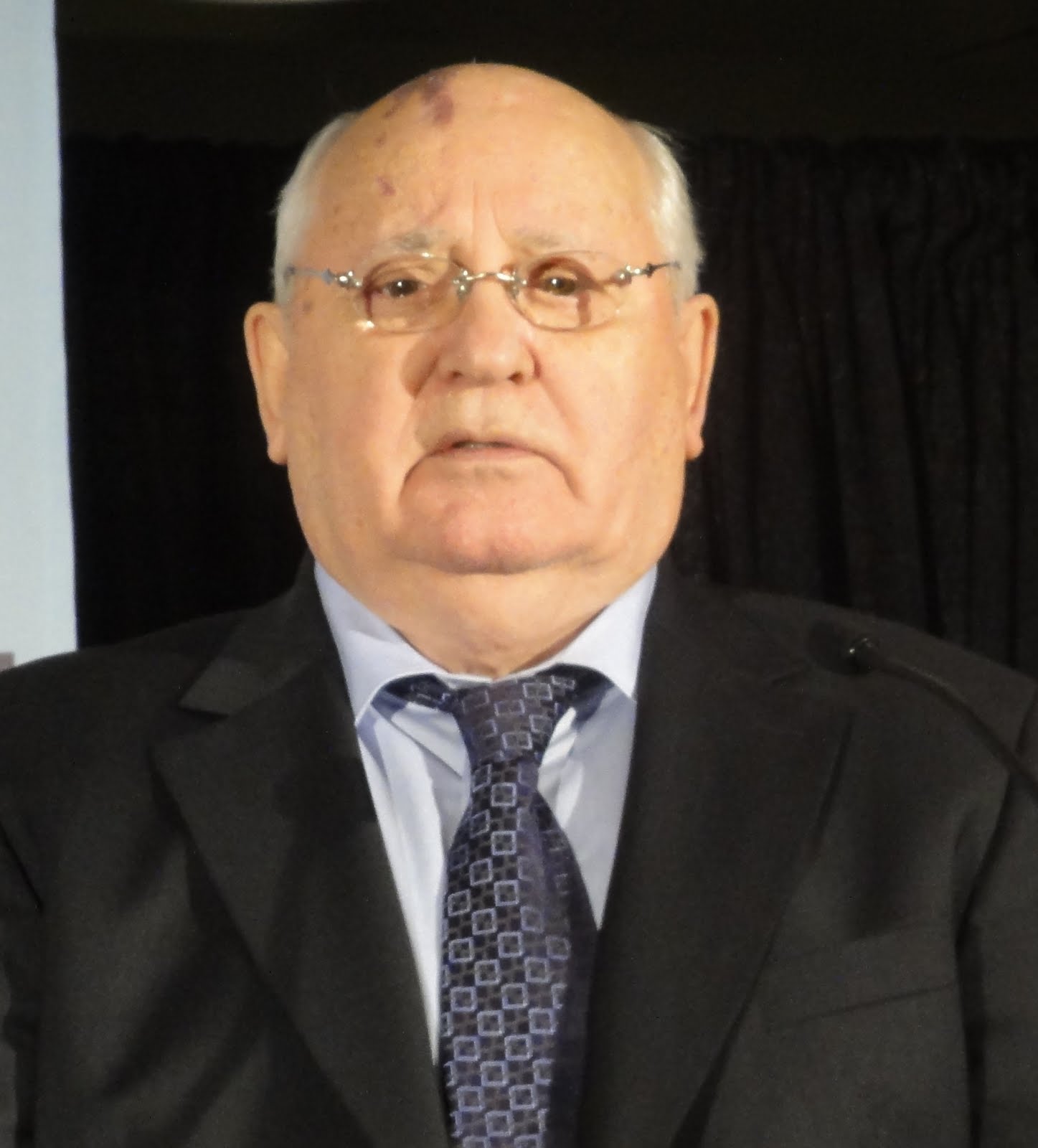
Oct. 13, 1986 was the closing day of Vancouver’s Expo 86. The world exposition on transportation and communication. I was there, all the way until the end, roaming the empty, closed site one last time. From end-to-end.
Twenty-five years later I was in two venues that didn’t exist at the time: Rogers Arena, built in 1995 near the site of Expo 86’s giant flag, hockey stick and puck and Vancouver Convention Centre West, opened in 2009 to be the international broadcast centre for the 2010 Winter Olympics. The east wing was built as the Expo 86 Canada Pavilion.
At Rogers Arena, it was Free the Children’s annual We Day. A day of inspirational speakers and hopeful messages for the leaders of tomorrow. With what passes for today’s top 40 music between the speakers.
Among the speakers was Mikhail Gorbachev, the last president of the Soviet Union from 1985 to 1991. A man who changed the world and won the Nobel Peace Prize on Oct. 14, 1990. I was among the minority of people in the arena who was alive when Gorbachev was in power. (I also remember one of his previous Vancouver visits, when Nardwuar the Human Serviette made him laugh.)
Gorbachev, who turned 80 earlier this year, told the youth audience, through his translator, that the hopes of the world after the Cold War have not been fulfilled. The world is troubled by terrorism, poverty and an environmental crisis.
“The global financial crisis that was caused by the greed of a few people is being resolved at the expense of ordinary people, ordinary people who are not to blame for that crisis,” he said.
He said we're on the cusp of a new arms race that could be more dangerous than the last one.
His most poignant message?
"Never despair… never panic. Unite," Gorbachev said. "Don't allow anyone to deceive you. Don't allow anyone to exploit you."
After his speech, he came to a news conference. Reporters were crestfallen when told by a We Day organizer that the news conference would last only 10 minutes. We got angry when the moderator cut it short. Both Gorbachev and his interpreter briefly pleaded with their hosts for more time! Imagine that, a career politician who did not want a press conference to end!
That bought him a few more minutes, but it was still not enough. A great statesman deserves more time. A man who changed the world deserves more time.
He was asked for his thoughts on the Occupy Wall Street movement. During his presidency, people in the Eastern Bloc risked their lives and took to the streets to demand better government and better jobs. It even influenced the short-lived pro-democracy movement in China that ended so violently at Tiananmen Square on June 4, 1989.
"The constitution of your country, the constitution of our country, the constitutions of all democratic countries contain democratic rights, including the right to protest. In Russia, we know that there are people, including people in government, who don’t like it when people protest in the streets and when they present their demands by demonstrating. And sometimes there are even bad consequences and even clashes as a result,” Gorbachev said.
“We have to be wary, though, of certain extremist elements who are trying to turn these just demands and just protests in a certain direction to exploit those movements. Nevertheless, those elements are an exception. People today are more confident when they act; they are more confident of the rightness of their demands and their actions.”
In the afternoon, I attended a news conference to announce the Grey Cup festival in Vancouver, where the star attraction was not the Grey Cup (it wasn’t there) or the Vanier Cup (which was there), but Premier Christy Clark. The B.C. Liberals “jersey girl” added a Grey Cup souvenir jersey to her collection. She even dropped a football, in a neo-Stanfieldian moment. (My camera was unfortunately not rolling.)

This is what she had to say about the Occupy Wall Street movement coming to Vancouver on Oct. 15:
"Canada is a profoundly different place than America. When we look south of the border and see what's going on there, we feel pretty grateful that we live here, in a country where we have a thriving middle class, where we have a large degree of equity and social justice. I think groups that want to try and start up something like Occupy Wall Street here aren't going to see the same kind of success. We are a fundamentally different country from America. We are a fair country, we're not always perfect, there's no question about that, but this is a country that is a whole lot fairer than almost any other country in the world. I think when you live in a country like this it's a lot harder to recruit people to groups like Occupy Wall Street than it is in other countries in the world where maybe they don't have the same kind of equity that we have here."
Translation: Be a good Canadian. Be deferential to the powers that be. You have it good, don't demand better. Don't complain or ask questions.
After a scrum that lasted exactly four minutes and 52 seconds, Clark turned her back and walked away. My shouted question about the upcoming first anniversary of the end of the notorious "Basi-Virk" government corruption trial didn’t prompt her to turn around. Instead it made her walk away faster, into a nearby ballroom.
Before her tenure as a CKNW talkshow host, Clark was deputy premier when BC Rail, a taxpayer-owned railway, was privatized in a fishy deal with CN Rail in 2003. A deal which sparked the famed bribery trial of ministerial aides David Basi and Bob Virk, which shockingly ended on Oct. 18, 2010 with a plea bargain and the government agreeing to pay Basi and Virk’s $6 million legal bills.
Here’s my story on the first anniversary and renewed calls for a public inquiry by the men who know the scandal the best: Bill Tieleman and Alex Tsakumis.
While the Occupy Wall Street movement encourages discourse about the role of governments and corporations, British Columbians should never forget the scandal which dominated the news for most of a decade. The BC Rail corruption scandal was the most egregious example in this province's history of government cozying up to corporate interests and losing sight of its responsibility to the people. A public asset was sold in sordid fashion and none of the politicians involved has offered a full and complete explanation about how and why the deal went down.
Premier Gordon Campbell said it was only about two men who admitted their guilt. His successor Clark has parroted the line. She has refused calls for a public inquiry.
Are they telling the truth or was this a massive cover-up? Were Basi and Virk the only perpetrators or were they patsies?
The reality is government has to buy from and sell to private companies. If a tendering process cannot be transparent when it demands transparency or be secret when it demands secrecy, why should the taxpaying public or private companies have any trust in government? Until "BC Railscam" is fully understood and government integrity rescued, citizens will remain skeptical of any case of any private-public partnership, privatization, subsidy or bailout.
Contrast Clark's behavior with that of Gorbachev, a man of courage, willing to spend more time to take more questions. During his presidency, he was a politician who wanted less power, not more, in a country with a nasty history of megalomania (read: Stalin). Gorbachev is not universally admired in Russia. Many of his compatriots wish the Soviet Union still existed. Others are thankful they could taste some freedom, but want less corruption and more democracy from today's leadership duo of Dmitry Medvedev and Vladimir Putin.
Gorbachev wanted the people to take a deep breath and shape their own future, not politicians. "Glasnost" (openness) and "Perestroika" (restructuring) were the hallmarks of Gorbachev's administration. What a concept? They mean so much more than Clark's "jobs" and "families" mantra. Without openness and restructuring, how can families enjoy prosperity?
If people don’t trust their government to listen to the people, then people take to the streets in protest. A protest like Occupy Wall Street. Or Occupy Vancouver.
Subscribe to:
Posts (Atom)
